
Buying an engagement ring comes down to a handful of decisions taken in the right order: the budget, the centre diamond, its certificate, the setting, the metal and the size. This guide walks through each one the way the trade weighs it, then explains how buying works with us in Beirut, from browsing our engagement rings in Lebanon and certified loose diamonds to collecting the finished ring. If you already know what you like, you can pair a stone and a setting in the ring builder.
Set a budget first, without a rule of thumb
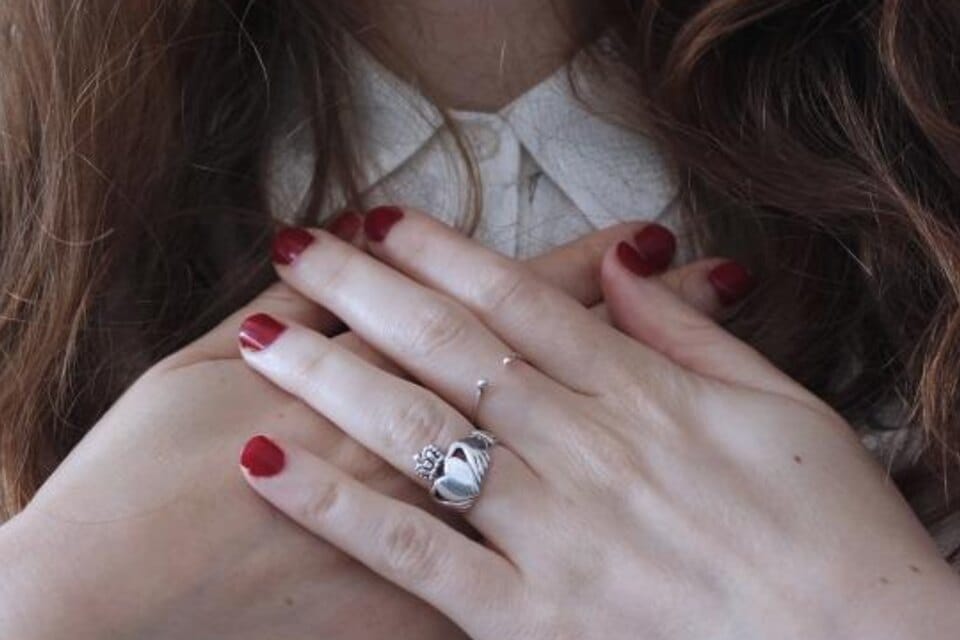
There is no correct figure for an engagement ring, and the “months of salary” rules were written by advertisers, not jewellers. Choose an amount you can give gladly, without debt and without regret, and settle it before you look at a single stone. A number fixed in advance is far easier to respect than one negotiated in front of something beautiful. Our guide to how much to spend on an engagement ring works through that thinking.
Then decide roughly how the budget divides. In most rings the centre diamond takes the larger share, while the setting adds its metal, the craftsmanship and any small diamonds. A plain solitaire leaves more for the stone; a halo or pavé design asks more for the ring itself. Knowing the split early stops you falling for a stone the setting can no longer afford.
Choose the centre diamond
The centre diamond decides most of how the ring looks and most of what it costs, so it deserves most of your attention. Four questions settle it.
Shape: a matter of taste
Shape is the one choice driven by personality rather than grading. A round brilliant diamond returns the most light of any shape and suits every setting. An oval cut diamond sparkles in a similar way but spreads its weight along the finger, so it looks larger than a round of the same carat; check its video for a heavy bow-tie, the dark band some ovals show across the centre. Princess, cushion, radiant and heart shapes are also usually in our Beirut stock, and others, such as emerald or pear, can be sourced to your specification, usually within 2 to 3 weeks.
Cut first, always
Cut is the only one of the 4Cs that is about workmanship rather than nature, and it decides whether a diamond sparkles or sits flat. For a round brilliant, choose an Excellent cut grade, or a Very Good stone you have watched perform on video; fancy shapes carry no overall cut grade on a GIA report, so their light is judged on the stone itself. If you must give something up, give up a grade of colour or clarity before you give up cut. Our 4Cs of diamonds explained sets out the reasoning.
Colour and clarity: the sweet spots
Both scales have a point beyond which you pay for rarity the eye cannot see once the stone is set. For most buyers the sweet spot is G or H colour, which faces up white in almost any setting, with VS2 clarity or a carefully chosen SI1 that is eye-clean, meaning no inclusion shows to the naked eye. In yellow or rose gold, an I or J stone can look just as white against the warm metal.
Clarity is judged stone by stone: a small white feather near the edge is invisible on the hand, a dark crystal under the table is not. Our diamond colour and clarity chart maps every grade.
Carat versus face-up size
Carat is weight, not size: what the eye reads is the width of the stone from above. Prices step up at round numbers such as half a carat and one carat, while visible size does not: a well-cut 0.90 carat round measures about 6.2 mm across against about 6.5 mm for a full carat, a difference few eyes can see on the hand. If you have a size in mind, compare real stones on our 1 carat diamonds page and read the measurements, not just the weight.
Insist on a GIA or HRD certificate, then verify it
A grading report from an independent laboratory is what turns a seller’s description into a fact. Every diamond we sell is natural and graded by GIA or HRD, two laboratories the trade trusts to grade strictly. Learn to read the report before you choose: our line-by-line guide on how to read a GIA diamond report explains every field, from the measurements to the clarity plot.
Then verify it. Type the laboratory’s own web address yourself, enter the report number, and check that the weight, measurements and grades match the stone’s listing. The method is in our guide to verifying a GIA or HRD certificate online. The other half of your protection is the seller: buy from an established dealer who stands behind every stone matching its report, rather than trying to play detective yourself.
A report confirms grades; it does not tell you whether a stone is beautiful. We send each stone’s certificate and its pre-recorded 360° video on WhatsApp, so you can judge cut, eye-clean clarity and any haze before you reserve anything.
Choose the setting style
The setting frames the diamond, protects it and sets the tone of the whole ring. These are the main families, each with its own page of designs:
- Solitaire settings: a single diamond on a plain band, showing the most of the stone and dating least.
- Halo settings: a circle of small diamonds around the centre stone, adding sparkle and making it look larger from above.
- Hidden halo settings: a row of small diamonds tucked beneath the centre stone, unseen from above and bright from the side. Our hidden halo designs are made for round brilliants.
- Pavé settings: small diamonds set close together along the band, so the whole ring catches the light.
- Side-stone settings: accent stones such as baguettes, rounds or pears on the shoulders, adding width and presence.
- Three-stone rings: a centre diamond between two smaller, matched stones, often read as past, present and future.
- Vintage-style rings: newly made designs inspired by earlier eras, with milgrain beading, filigree or engraving.
- Cathedral settings: arches of metal rising from the band to lift the centre stone, for height and a graceful side profile.
- Twisted and infinity rings: a band that spirals or crosses over itself toward the centre diamond.
We also make bezel and nature-inspired designs. To choose, look at what she already wears: delicate pieces point toward a solitaire or hidden halo, bolder jewellery toward a halo or pavé, and a busy, hands-on life toward a low profile or a protective bezel. Our guide to ring settings explains how each behaves day to day. If she has a design saved on her phone, send us a photo on WhatsApp and we will tell you honestly whether it can be made.
Choose the metal
Every setting can be made in 18K white gold, 18K yellow gold, 18K rose gold or platinum, and the metal changes both the look and the upkeep.
- White gold engagement rings have a bright, cool finish from rhodium plating that flatters colourless diamonds. The plating softens with wear, and a jeweller can refresh it.
- Yellow gold engagement rings are warm and classic, never need plating, and let a stone in the I to J range look white on the hand.
- Rose gold engagement rings take a soft pink from copper in the alloy, flatter most skin tones and suit vintage designs.
- Platinum engagement rings are naturally white, dense and secure around the prongs, and the heaviest and dearest of the four.
Choose metal and diamond together. A white metal shows off a high colour grade, while warm gold forgives a warmer stone and lets you put the saving into cut or size. Our white gold, yellow gold and platinum guide compares how each one wears over the years.
Get the ring size right
Ring size worries buyers more than it should, but arriving close makes the moment easier. The most reliable method is to borrow a ring she wears on her ring finger and measure its inner diameter in millimetres. A strip of paper wrapped around the base of the finger works too, measured in the evening and not when the hands are cold. Our ring size guide has the conversion table, and a ring sizer can be sent with insured delivery within Greater Beirut.
If you are between two sizes, choose the larger, since sizing down is easier than sizing up. Settle the size before the ring is crafted: a plain band is straightforward for a jeweller to adjust later, while pavé and some detailed bands are more limited.
Plan your timeline
Every ring is made to order in Beirut in about a week to ten days from the moment the diamond and setting are reserved. Add time to shortlist stones and settle the size: six to eight weeks before the day you plan to ask is comfortable, four is manageable if you already know what you want. If the shape you have in mind is not in stock, allow 2 to 3 weeks for sourcing on top.
When time is short, the express option sets your chosen diamond into a ready-made mounting in 24 to 48 hours. The choice of designs and sizes is narrower, so treat it as a safety net rather than a plan. For a proposal around the holidays, our December ring timeline works backwards week by week.
Buying from abroad
Many proposals happen in Lebanon while the person proposing is based elsewhere, and distance changes very little. You choose and verify the diamond remotely, with its certificate and 360° video sent on WhatsApp, reserve it with a deposit, and confirm the setting, metal and size with us on WhatsApp. Tell us the date you land: reserving two to three weeks before you arrive leaves a comfortable margin, and the ring is made while you are away. You then collect it by appointment in Beirut, or have it delivered, insured, to an address in Greater Beirut. Our page for buyers living abroad sets out each step.
How buying works with diamonds.com.lb
We are an online diamond house in Beirut. Everything you need to choose is on the website or on WhatsApp, and meeting in person happens only to pay and collect, by appointment.
- Choose. Pick a certified natural diamond and a setting online or on WhatsApp, where finished ring prices are quoted, usually the same day.
- Verify. We send the stone’s GIA or HRD certificate and its 360° video on WhatsApp, and you check the report number on the laboratory’s own website.
- Reserve with a deposit. Every reservation requires a deposit, which takes the diamond off sale in your name while the ring is made.
- Pay the balance and receive the ring. Collect it by appointment in Beirut, where the exact address is shared privately after booking, or choose free insured delivery within Greater Beirut.
Every design detail is confirmed with you before crafting begins, because a made-to-order setting cannot be refunded once it is made. A loose diamond can be returned within 7 days if it is unset, unworn and undamaged, with its certificate and packaging; see our returns page and how it works.
Settings to start from
A selection of designs to begin with, each made to order around the diamond you choose, in any of the four metals.
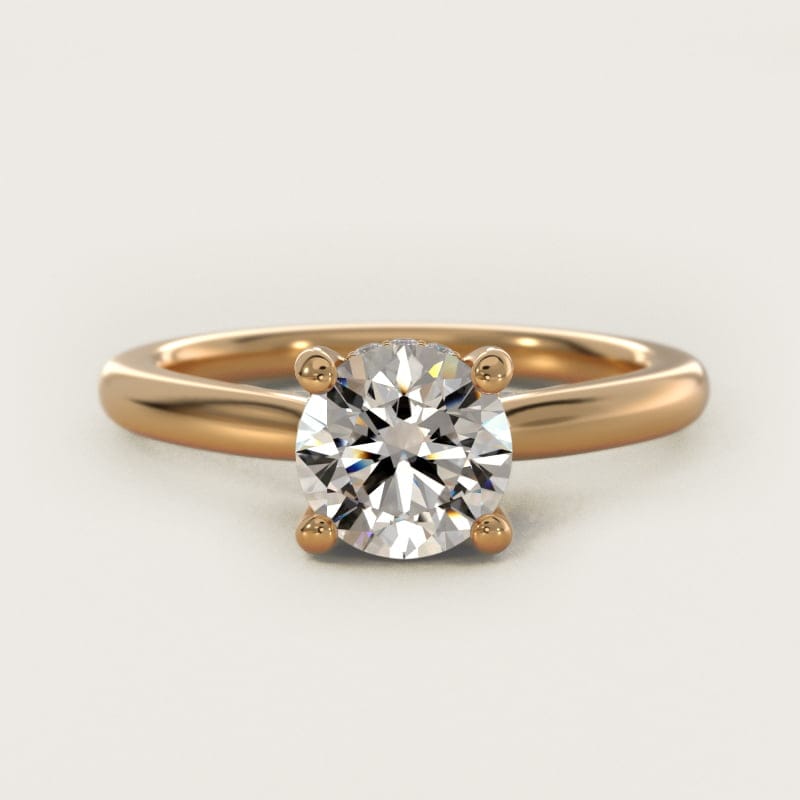
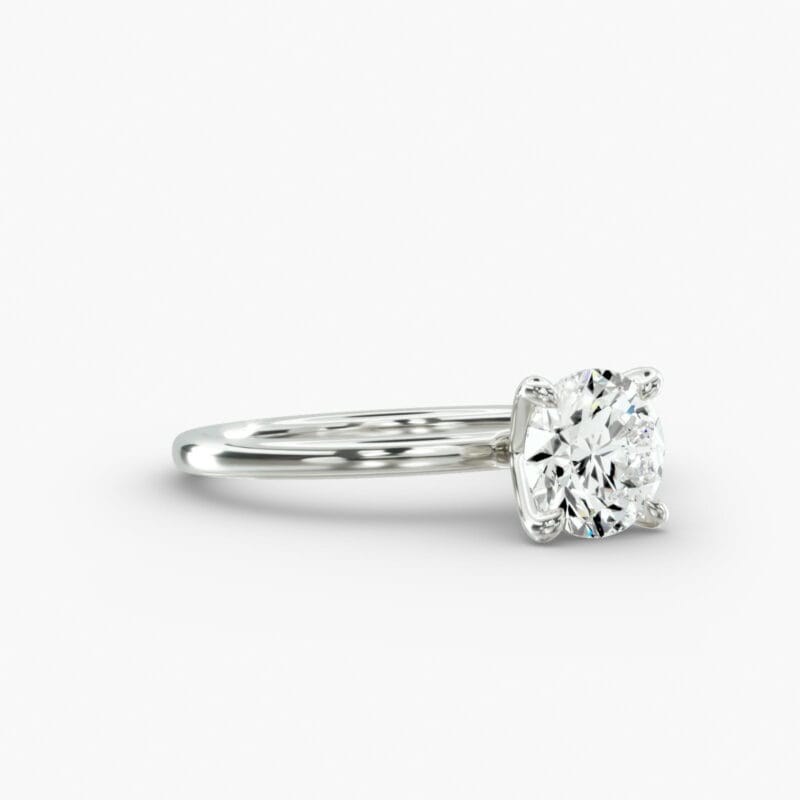
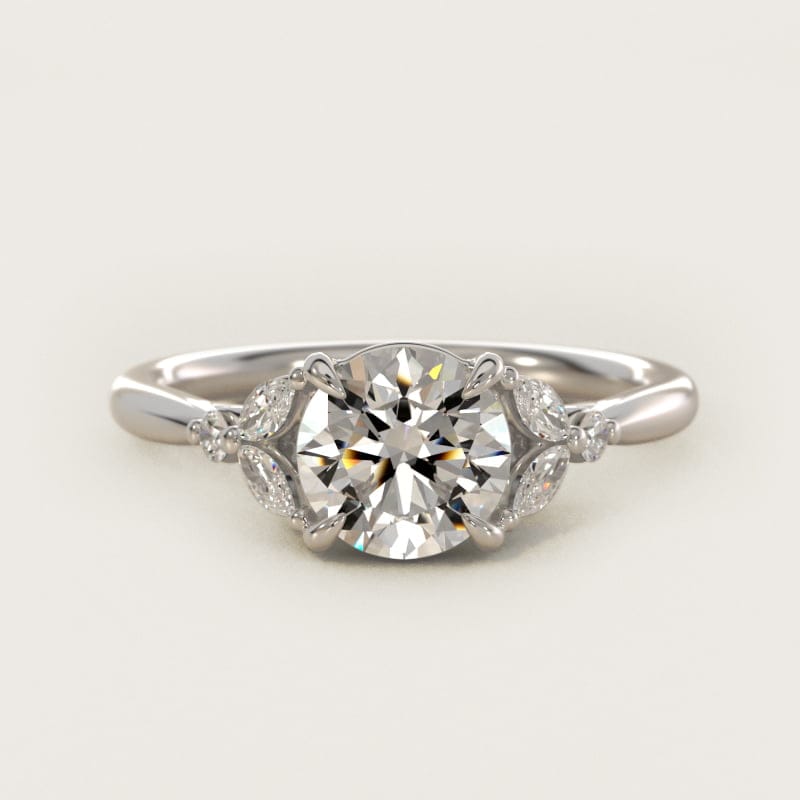
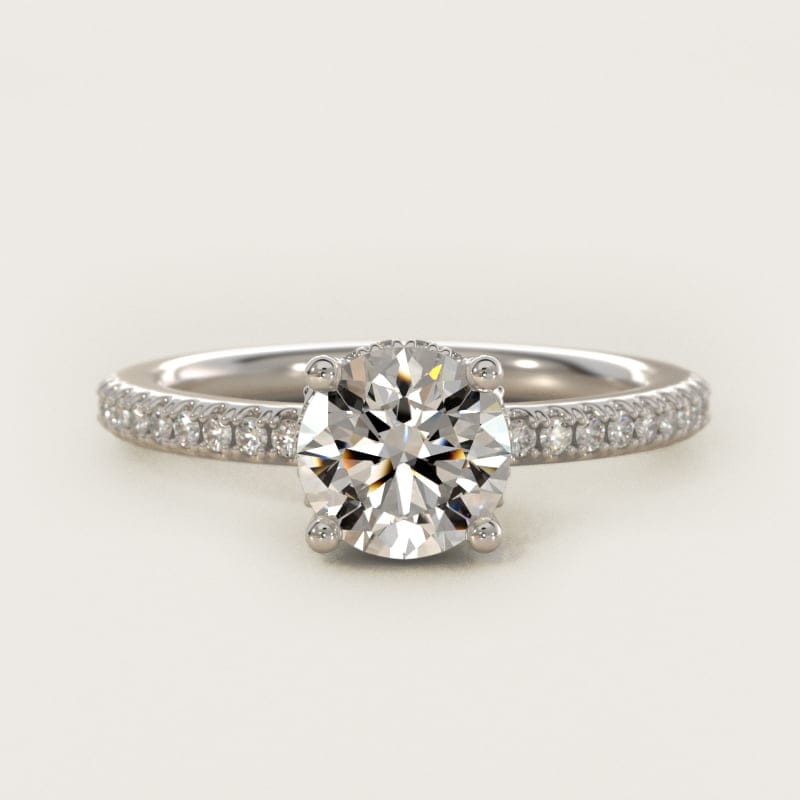
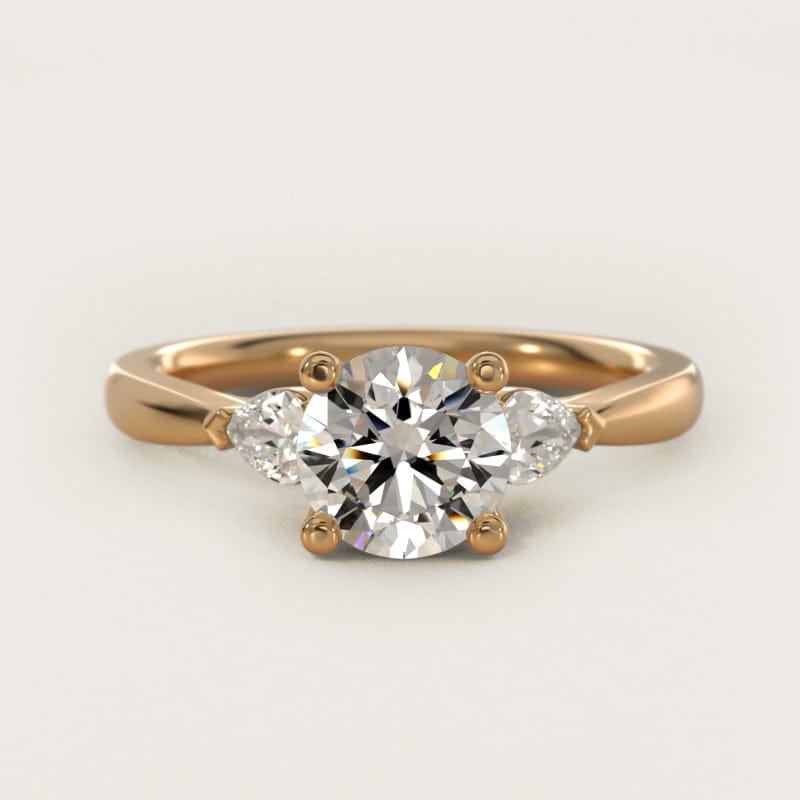
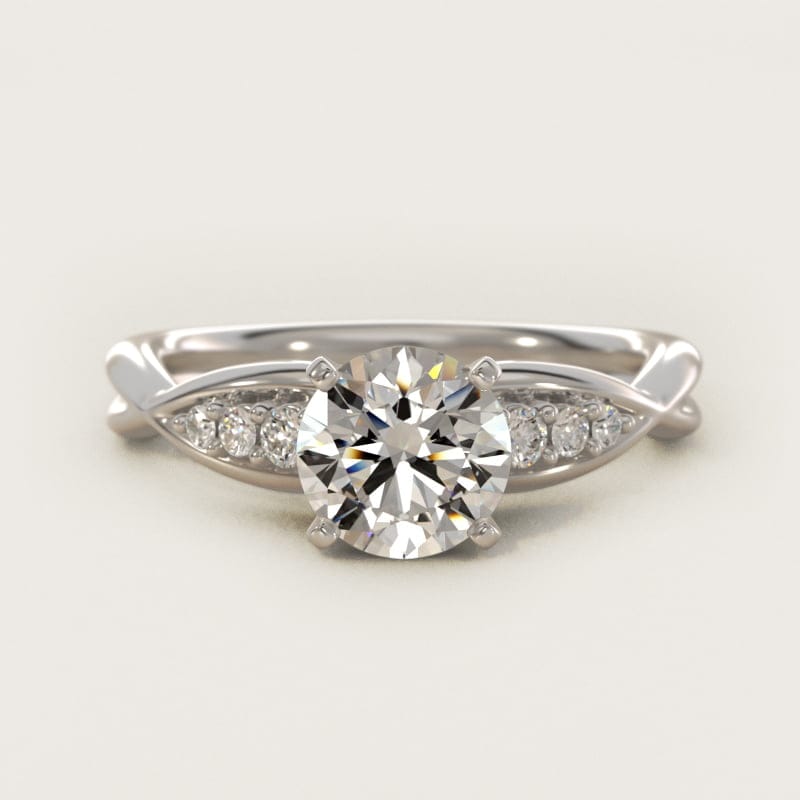
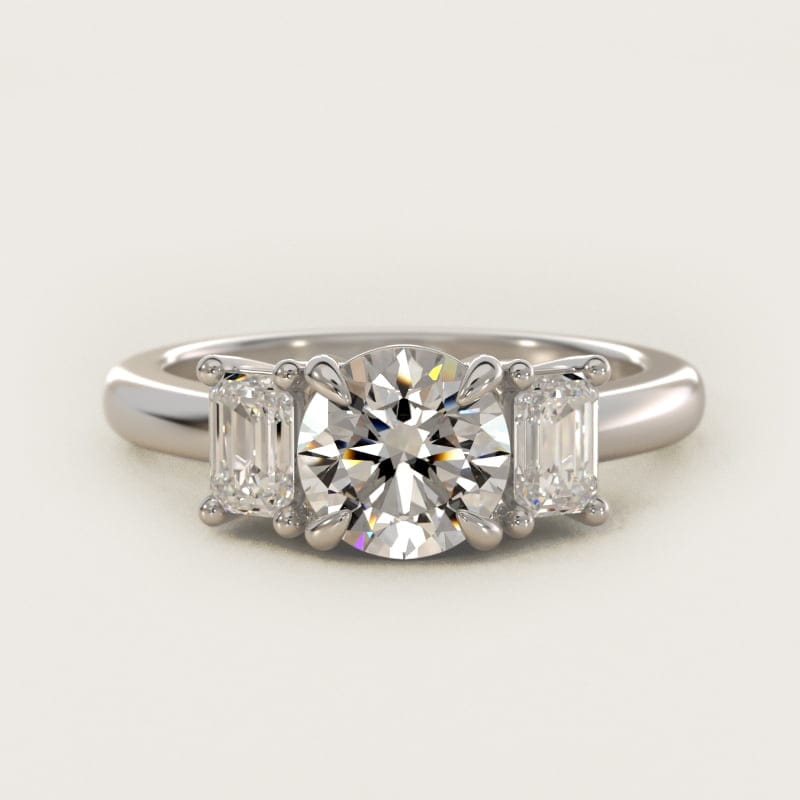
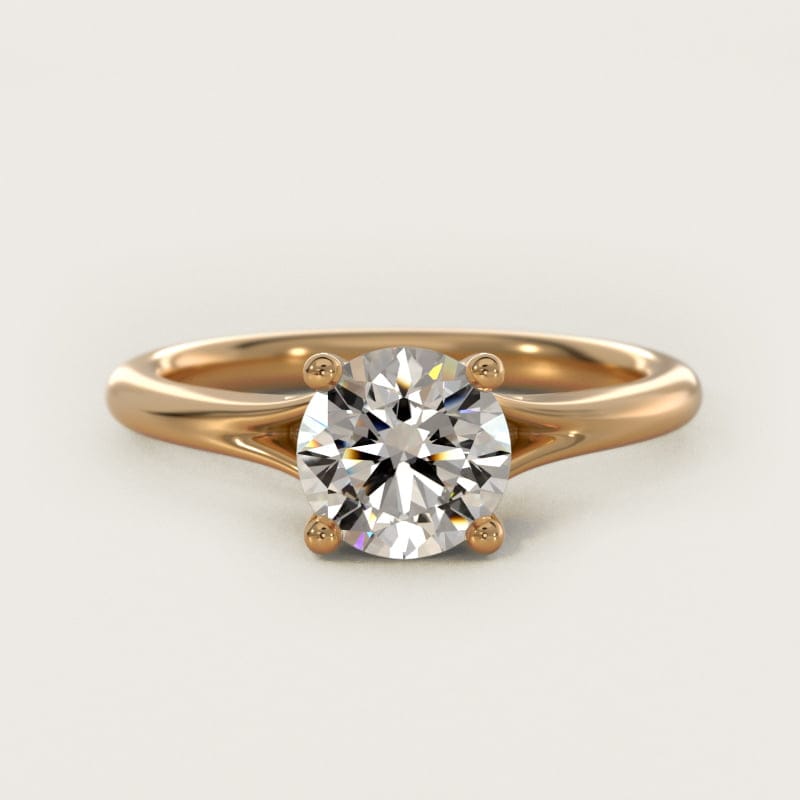
Browse all 227 engagement ring settings
Common questions
Should I choose the diamond or the setting first?
In most cases, choose the diamond first, because it carries most of the budget and the setting is made around it. Fix the shape, then the cut, colour and clarity, then pick a setting that suits both the stone and her hand. If she already loves a particular design, check which shapes it is made for before you shortlist stones.
What colour and clarity are best for an engagement ring?
For most buyers, G or H colour with VS2 clarity, or an eye-clean SI1, paired with an Excellent cut. These stones face up white and clean once set, and the saving against the top grades buys a better cut or a larger stone. In yellow or rose gold, an I or J colour can look just as white.
Which setting makes the diamond look biggest?
A halo, which surrounds the centre stone with small diamonds and makes it read noticeably larger from above. A slim band also flatters the same diamond by contrast, and elongated shapes such as an oval spread more width per carat than a round. A hidden halo adds sparkle from the side without changing the solitaire outline.
How far ahead should I order an engagement ring?
Six to eight weeks before the proposal is comfortable: time to shortlist and reserve a certified diamond, choose the setting and size, and have the ring made to order in about a week to ten days. If you are short of time, the express option sets your diamond into a ready-made mounting in 24 to 48 hours.
Can I return an engagement ring?
A loose diamond bought from diamonds.com.lb can be returned within 7 days if it is unset, unworn and undamaged, with its certificate and packaging. A ring setting made to order cannot be refunded once it has been crafted, which is why every detail of design, metal and size is confirmed with you before work begins.
Can I buy an engagement ring in Lebanon from abroad?
Yes. You choose and verify the diamond remotely, with its certificate and 360° video sent on WhatsApp, reserve it with a deposit and confirm the setting and size. The ring is made while you are away and is ready to collect by appointment in Beirut when you land, or to be delivered, insured, within Greater Beirut.