
Side-Stone Engagement Rings in Lebanon
A side-stone engagement ring sets the centre diamond between accent stones that flank it on either side, lending the ring more presence, more width across the finger and more sparkle. The three-stone ring is the best-known version of this idea, and one of the most requested styles we build in Beirut. Here is how a side-stone setting works, who it suits, and how we make sure every stone in it is one you can verify. To compare it with every other style we make, browse our full range of engagement rings in Lebanon.
Side-stone settings you can order
Each design below is made to order in Beirut, in 18K white, yellow or rose gold or platinum. See all our engagement rings in Lebanon, or pair a setting with a certified diamond from our stock.
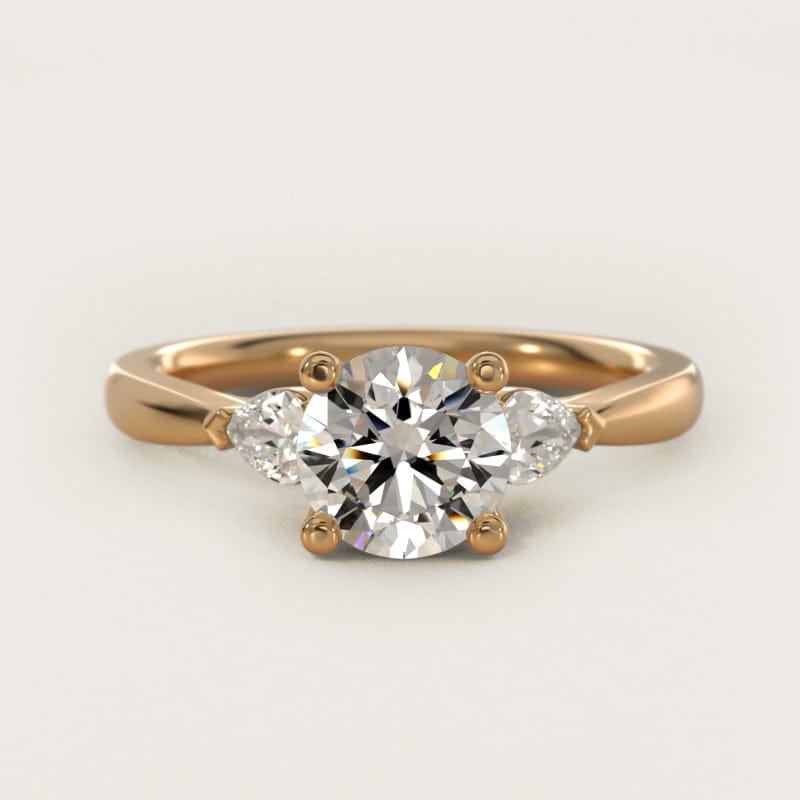
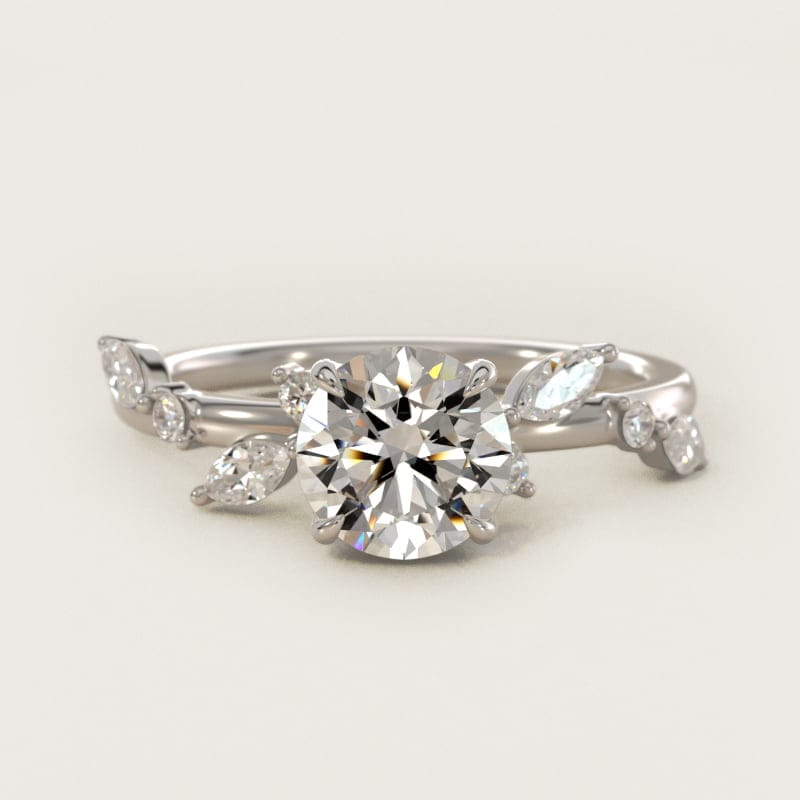
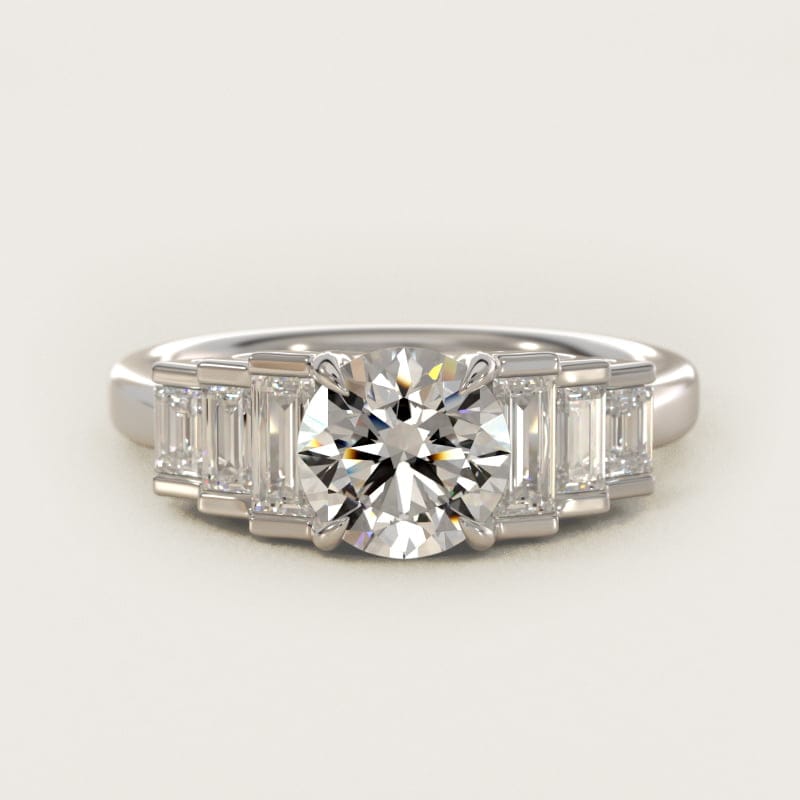
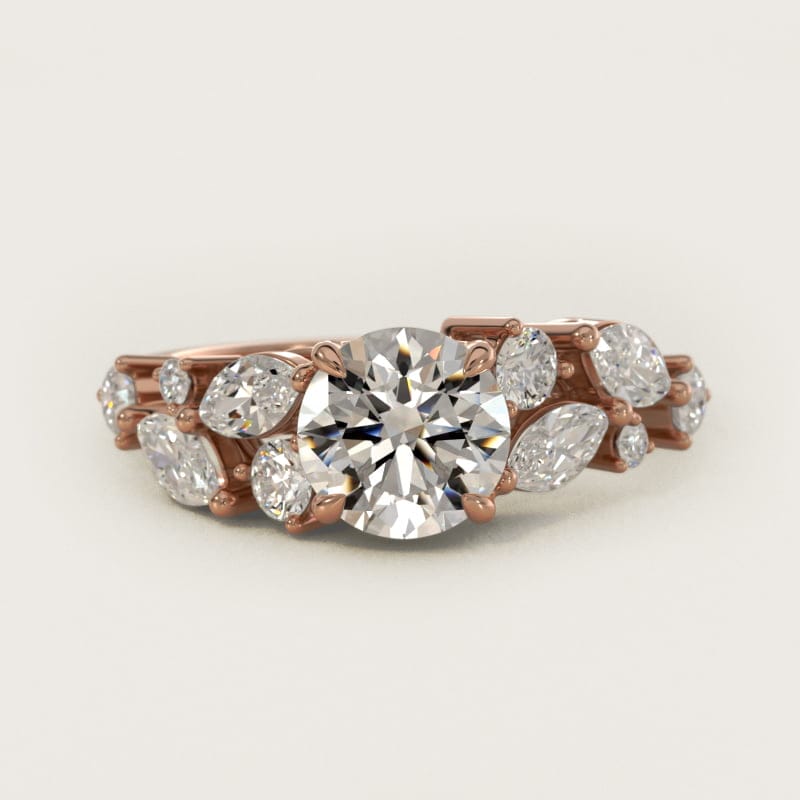
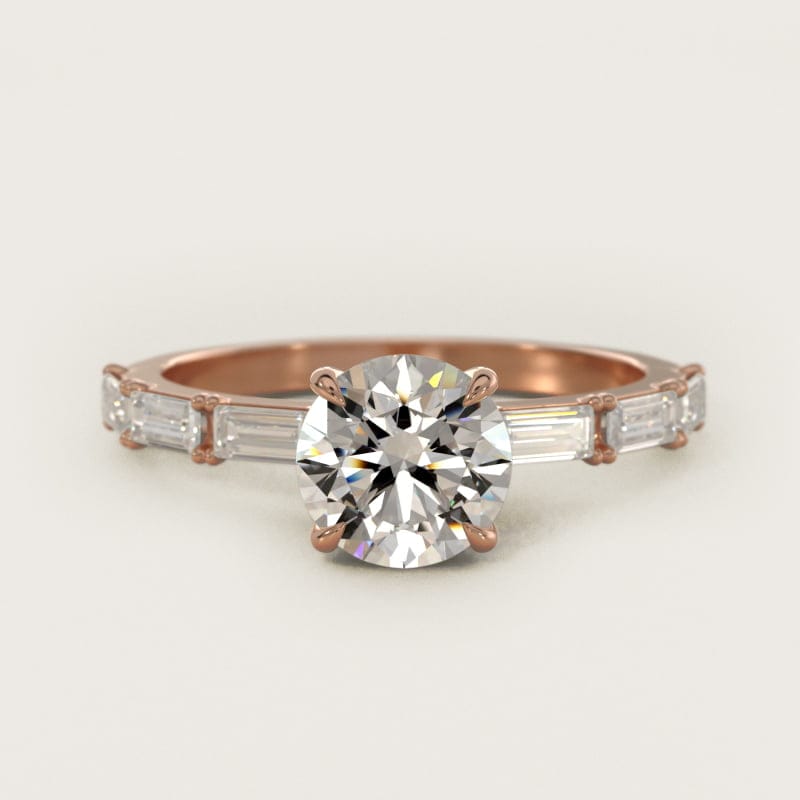
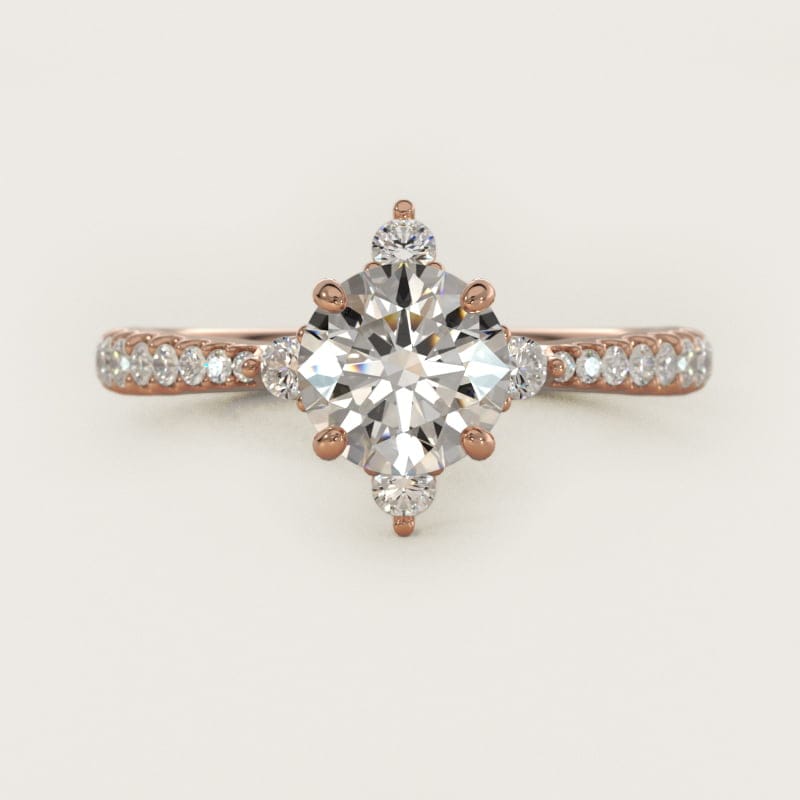
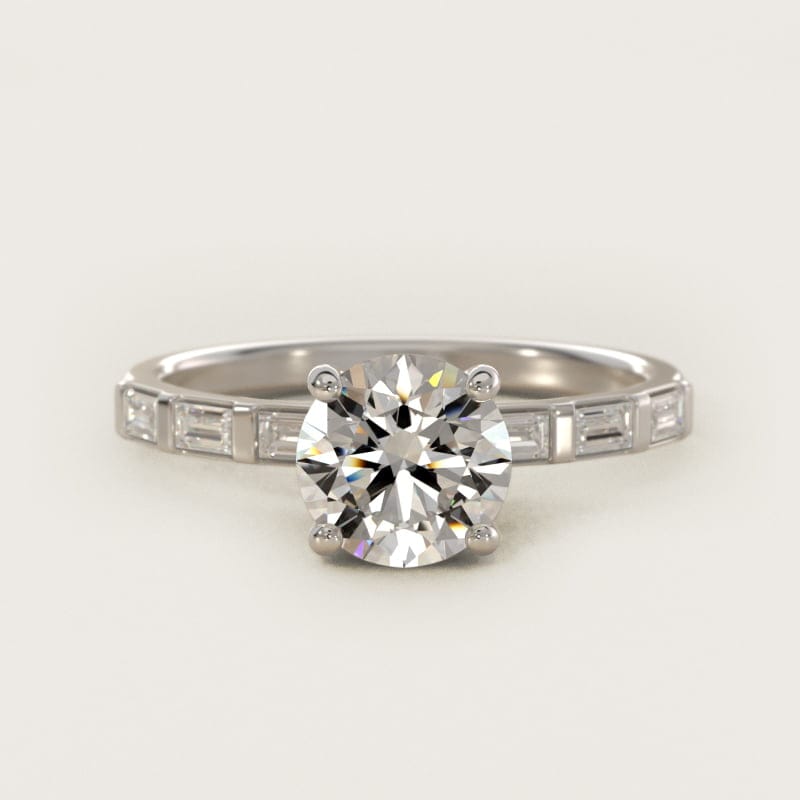
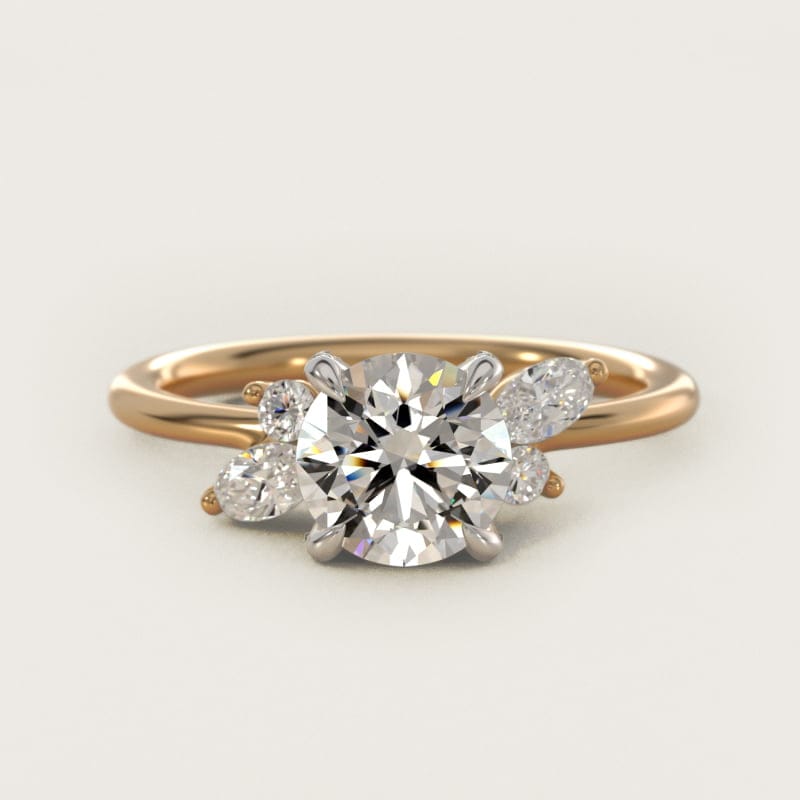
See all 56 settings in this style
All 56 side-stone rings, by diamond shape
Round
- Round Diamond Pear Side-Stone Engagement Ring
- Round Diamond Whisper Side-Stone Engagement Ring
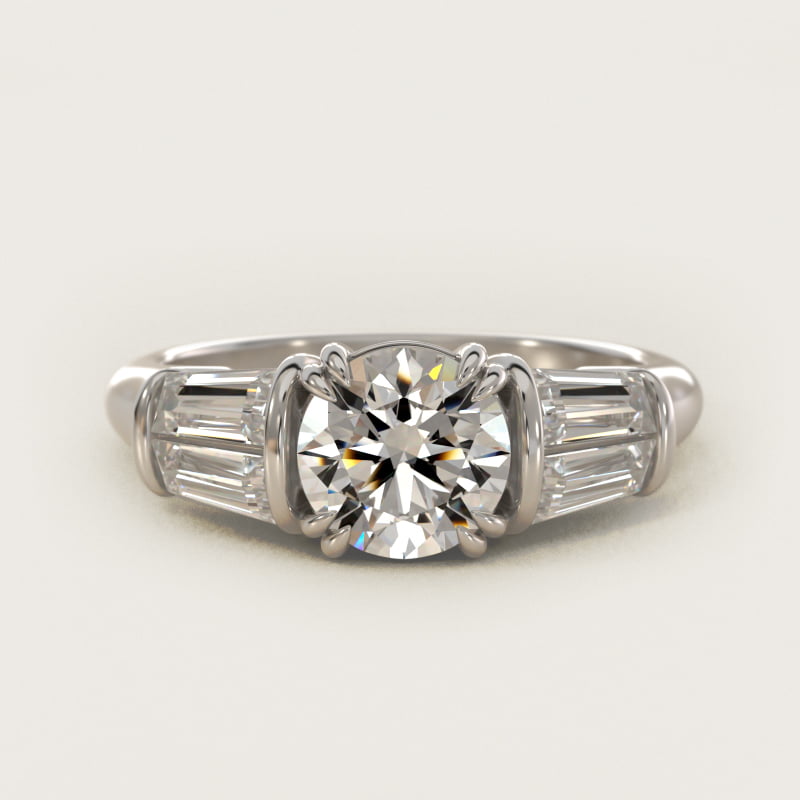
- Round Escalating Baguette Side-Stone Engagement Ring
- Round Diamond Nest Side-Stone Engagement Ring
- Round Floating Diamond Line Side-Stone Engagement Ring
- Round Compass-Point Diamond Accent Engagement Ring
- Round Straight Baguette Row Side-Stone Engagement Ring
- Round Marquise Accent Side-Stone Engagement Ring
- Round Entangled Vines Side-Stone Engagement Ring
- Round Diamond Channel Men's Engagement Ring
- Round Five-Stone Tapered Baguette Diamond Engagement Ring
- Round Eight-Stone Contour Engagement Ring
Princess
Cushion
Oval
Emerald
Pear
Marquise
Radiant
Asscher
What a side-stone setting is
In a side-stone design the centre diamond is the focus, and one or more smaller diamonds sit to each side of it. The accents can be a matched pair of rounds, a graduated run of small stones, or shaped diamonds such as tapered baguettes or trapezoids that hug the centre. The effect is a ring that reads larger and brighter than a plain solitaire, without losing the clarity of a single leading stone.
The three-stone ring is the classic form: a centre flanked by two matched sides. Many people read those three diamonds as past, present and future, which is part of why the look has stayed meaningful for so long. Whether you take the symbolism to heart or simply like the balance of it, the three-stone is a calm, complete composition that wears beautifully on the hand.
Who it suits and how it wears
A side-stone ring suits anyone who wants visible scale and a little extra brilliance, while keeping a clear centre stone at the heart of the design. Because the accents add width, the ring can make a modest centre carat look more generous, and it gives a larger centre a setting worthy of it.
- You want more sparkle and presence than a solitaire offers.
- You like a centre diamond that still stands on its own.
- You prefer a low, secure profile that lives easily with daily wear.
- You are drawn to the meaning of the three-stone arrangement.
It is worth seeing how settings behave on the hand before you decide, since width and height change the feel of a ring once it is on the finger. You can also start from scratch and build your ring around the centre and sides you prefer.
Centre shapes and accent shapes that pair well
Almost any centre shape can take side stones, but some pairings feel especially right. A round or oval centre sits naturally between two round or pear accents. An emerald or radiant centre looks composed and architectural with tapered baguettes or trapezoids along its sides. A cushion or princess centre carries graduated rounds with ease.
- Round or oval centre with matched round or pear sides.
- Emerald or radiant centre with tapered baguettes or trapezoids.
- Cushion or princess centre with graduated round accents.
If you are still weighing the look of each outline, our guide to diamond shapes walks through how each one behaves, and you can see our side-stone settings to picture the finished ring. Proportion matters here: the sides should support the centre, not crowd it, so we size the accents in millimetres to the centre you choose.
Why every stone, centre and sides, should be certified
It is easy to certify the centre and stay quiet about the rest. We do not work that way. The centre diamond in any ring we build is GIA- or HRD-certified with a report you can verify yourself, and every stone is a natural diamond with a 360° video so you can study it before you commit.
The accent stones deserve the same honesty. Side diamonds should be matched for colour and clarity so they flatter the centre rather than dull it, and their quality should be stated plainly, not glossed over. Our pricing follows the Rapaport benchmark and stays transparent across the centre and the sides, so you know exactly what you are paying for at every position in the ring. When you choose a certified diamond for the centre, you are choosing the same standard that governs the whole setting.
Build yours with us
We hold our diamonds physically in Beirut, guide remote and diaspora buyers through every stone on WhatsApp, each with its 360° video and certificate, and deliver free and insured across Greater Beirut, usually within 24 to 48 hours. Tell us the centre you have in mind and the side stones you picture, and we will compose a ring that is balanced, brilliant and fully certified, with every detail handled by people who hold the stones in their hands. Speak to us, and let us build yours.
Common questions about side-stone engagement rings
What is the difference between a side-stone and a three-stone ring?
A three-stone ring is one kind of side-stone ring: a centre diamond with exactly one stone on each side. Side-stone is the wider family, which also covers tapered baguettes, graduated rounds and several small stones along each shoulder. Our page on three-stone engagement rings covers that design on its own.
Do the side stones need to match the centre diamond in colour?
They should be close. Accents a shade lower in colour than the centre usually look fine on the hand, but a visible gap makes one or the other look tinted. We match the side stones to the centre you choose, for colour and for clarity, and state their quality plainly so you know what sits at every position.
Is a side-stone ring comfortable for everyday wear?
Yes. Many side-stone designs sit fairly low on the finger, so they catch less on clothes than a tall setting. The accents add width across the finger, which can feel unfamiliar at first. If you plan to wear a wedding band beside it, tell us on WhatsApp and we will say honestly which designs let the two sit well together.
Can a side-stone ring be resized?
Usually by a small amount, because the work is done on the plain lower part of the band, away from the accents. Rings with stones set far down the shoulders, or all the way round, are more limited. Getting the size right before crafting is the safest route: our ring size guide explains how, and we advise on each design on WhatsApp.
What sets the price of a side-stone ring?
The centre diamond sets most of the price. Then come the metal and the side stones, whose size, number and quality change the cost of the setting. Every stone in stock shows its real price on its own page, and we quote the side-stone setting on WhatsApp, usually the same day, with the accents described plainly.