
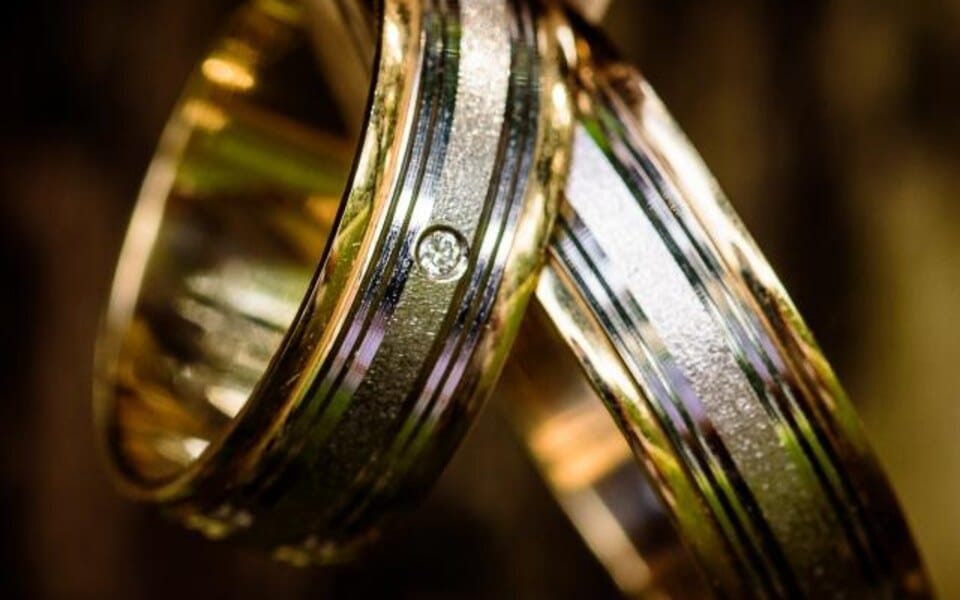
The choice of white gold vs yellow gold vs platinum decides more than the colour of a ring; it shapes how the metal wears over a lifetime, how much upkeep it asks of you, and even how white your diamond appears. Here is how the trade weighs the three, plainly, so you can match metal to stone and to the life it will live on.
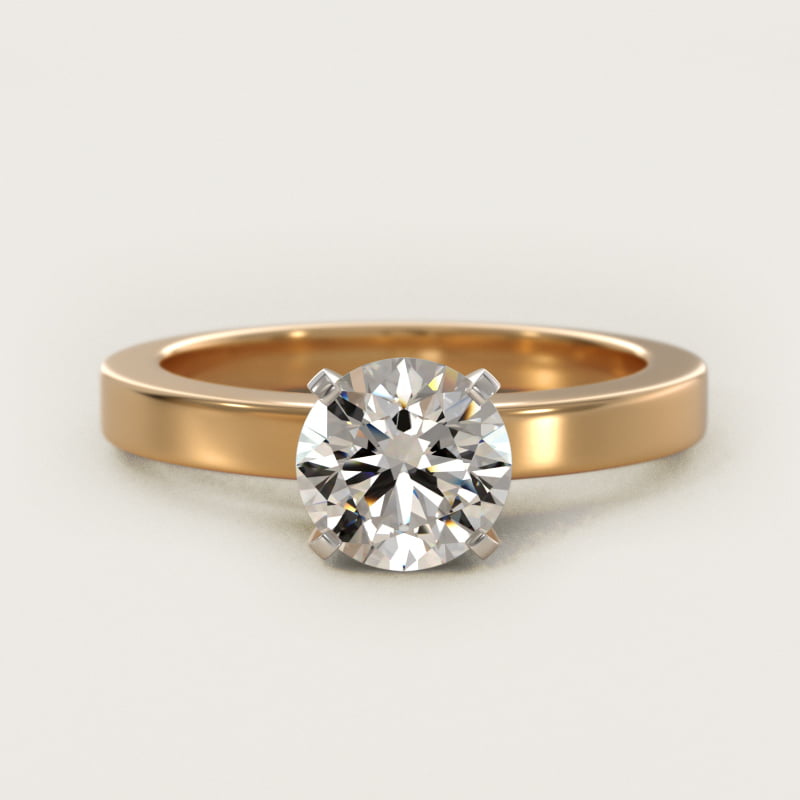
How the three metals actually look
Begin with the eye, because that is where most people begin. Yellow gold is the warm, traditional choice, the colour of gold as everyone pictures it, mellow and unmistakable. White gold is yellow gold alloyed paler and then plated with rhodium, a bright white metal from the platinum family, to give it that crisp, mirror-cool finish. Platinum is naturally white, but a softer, slightly greyer white than freshly plated white gold, less a flash of silver, more a quiet pewter glow.
Rose gold belongs in the conversation too: it is yellow gold tinted with copper, soft and pink, flattering on most skin and forgiving of wear, as our rose gold engagement rings show. In temperament it sits beside yellow, warm and low-maintenance for colour, so much of what follows on white gold vs yellow gold vs platinum applies to rose gold as well.
White gold vs yellow gold vs platinum on durability and wear
On white gold vs yellow gold vs platinum, durability is where the three part company, and where buyers are most often surprised. Platinum is the densest and most durable of the three. It does not wear away so much as move aside: a knock displaces metal rather than removing it, which is why a platinum engagement ring holds a stone with such quiet security over decades. In return it develops a patina, a soft, matte sheen of fine surface marks that many people grow to love and others have polished back to high shine. Either way, the metal itself is still all there.
Yellow gold in a sensible alloy is hard-wearing and, crucially, its colour goes all the way through. It scratches like any precious metal, but it never changes hue and never needs its colour restored. White gold is the one with an asterisk. The pale alloy beneath the rhodium carries a faint warmth of its own, so as the plating slowly wears, at the back of a band, along an edge that meets the world most often, a warmer tone begins to show through. The fix is simple and routine: re-plating, every so often, restores the bright white. It is worth knowing before you choose, not after.
Does the metal change how white my diamond looks?
It can, and this is the most useful nuance in the whole decision, one the trade has long used quietly. Colour is read in context. Set a slightly warm stone, one a grade or two down the colour scale, into a brilliant white setting, and the cool metal can make the diamond face up whiter than it would alone. Set that same stone into yellow gold, and something kinder happens: the warm metal flatters the warmth in the stone, so a lower colour grade reads as intentional, harmonious, rather than as a compromise. A warmer stone in yellow gold can genuinely mask a colour grade you might otherwise have paid a meaningful step up to avoid.
The practical lesson runs both ways. If you are drawn to a white setting, such as our white gold engagement rings, colour matters more, because a white metal shows off both a diamond’s whiteness and its warmth honestly. If you love yellow gold engagement rings, you can often choose a slightly warmer stone with a clear conscience and put the saving where it shows, into size or cut. Understanding the colour grade itself is the groundwork here; our guide to the 4Cs of diamonds explains how to read it before you commit to a metal.
Which metal needs the most maintenance?
If low upkeep matters to you, weigh this honestly:
- Yellow gold, the most forgiving for colour. It never needs re-plating; an occasional clean and the odd polish keep it bright for life.
- Platinum, almost no colour upkeep, since it is white all the way through. Its only question is whether you prefer the lived-in patina or the high polish, and a polish is a quick job.
- White gold, the most attention. Expect periodic re-plating to keep the crisp white, more often on a ring worn daily than on one kept for occasions.
None of this is onerous, and all of it is ordinary jewellery care. The fuller picture, cleaning, servicing and protecting a ring properly, sits in our note on ring care and insurance in Lebanon.
Matching the metal to skin tone, lifestyle and budget
Three honest filters, all qualitative:
- Skin tone. Cooler complexions often find white metals sit most naturally; warmer complexions tend to glow alongside yellow or rose. None of this is a rule; hold each against the hand in daylight, the only test that settles it.
- Lifestyle. Hands that work hard, garden, lift or wash often reward platinum’s resilience and yellow gold’s no-fuss colour. A white-gold ring will still serve you well; it simply asks for its re-plating a little more often.
- Budget tier. Platinum is the dearest by nature, being denser and rarer. The golds sit more gently, and white gold reaches for a brighter-than-platinum white at a friendlier price, if you accept the upkeep.
So how do I match metal to stone and to my life?
Pull the threads of white gold vs yellow gold vs platinum together. Choose platinum if you want the most durable, lowest-colour-maintenance white and you are content with a patina or a quick polish. Choose white gold if you love a bright cool white, want it to flatter a whiter stone, and do not mind the occasional re-plating. Choose yellow gold if you want warmth, the least upkeep, a metal whose colour never fades, and the quiet freedom to set a slightly warmer diamond that the gold will flatter rather than expose.
The setting style enters here too, since metal and design are chosen together; our guide to solitaire, halo and hidden-halo settings shows how each metal reads in each design. When the picture is clear, you can build your ring around the stone you love, or browse our engagement rings to see the three metals in the hand. And before any of it is finished, settle the practical detail of fit with our ring-size guide, the loveliest metal should still sit right on the finger that wears it.