
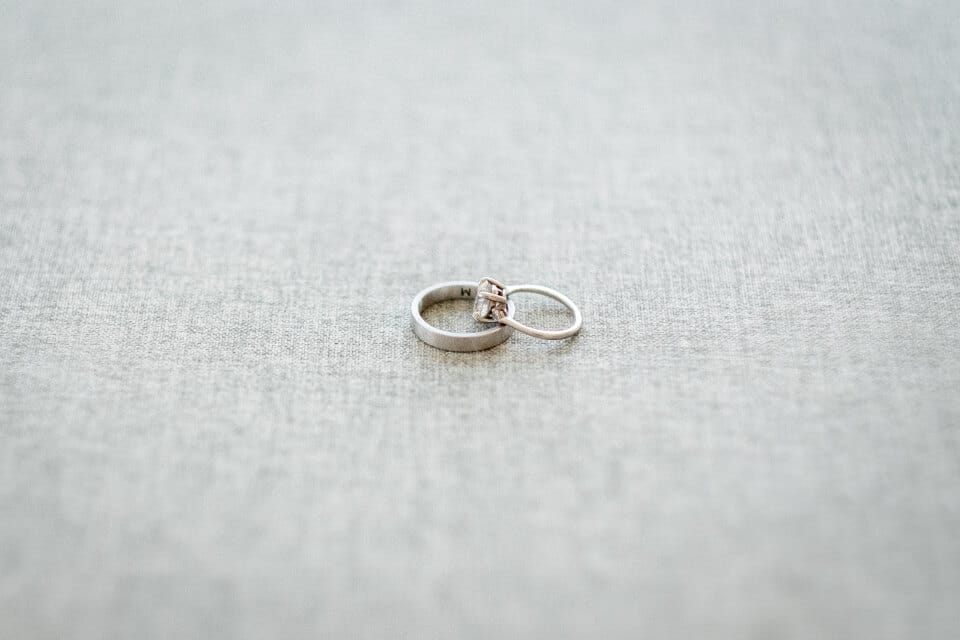
Once the stone is chosen, the setting is the only decision left, and it is the one that changes how the ring lives on her hand every day. Supplying loose diamonds to the jewellers of Beirut, we have watched the same stone look like three different rings in three different settings. Here is how the main families behave, and how to read her taste without asking outright.
The solitaire: timeless, and honest
A single stone on a plain band is the oldest answer for a reason. It hides nothing, which is exactly why it suits a fine diamond. Light enters and leaves from every angle, so a well-cut diamond looks its best and a poorly-cut one has nowhere to hide. It ages best and dates least, and a jeweller will quietly recommend it when the stone can carry the room on its own.
Halo and hidden halo: presence, two ways
A halo rings the centre stone with a circle of small diamonds, giving more apparent size than any other setting per carat of centre. From above, a modest stone reads considerably larger and the whole face of the ring catches light. It is the most generous setting for presence, and it suits a hand that wants the ring seen across a room.
The hidden halo is the quieter cousin. The ring of small stones sits below the centre, tucked under the girdle, so from above you see a clean solitaire, but turn the hand and fire flashes from the side, where the halo lives. It suits a woman who wants a simple silhouette face-on and a secret detail only close company notices.
Pavé, three-stone and vintage milgrain
These three say different things about taste, and which one she would choose tells you a great deal.
- Pavé band, the shank itself is set with tiny diamonds, so the whole band shimmers and the centre never sits alone. It suits someone who loves continuous sparkle and a band that does work of its own.
- Three-stone, a centre flanked by two companions, traditionally read as past, present and future. It suits a woman drawn to meaning and a little formality, and it carries a larger spread across the finger.
- Vintage milgrain, fine beaded metalwork along the edges, the look of a ring inherited rather than bought. It suits taste that leans antique: soft and detailed rather than sharp and modern.
The bezel: most secure, most modern
A bezel wraps the girdle of the stone in a thin collar of metal. It is the most protective setting we make, nothing snags, nothing loosens, the stone sits flush, which is why it suits an active hand: a surgeon, a mother of small children, anyone who works with her hands and would rather not think about her ring. It also reads as the most contemporary of the lot: clean and architectural. A bezel does shade the very edge of the stone, so it asks a little more of the cut to keep the diamond bright.
Reading her taste without asking
You rarely need to ask. Look at what she already wears. Delicate chains and small studs point towards a solitaire or hidden halo; bold, present jewellery points towards a halo or pavé. Those who love yellow gold and collect old pieces lean vintage. The ring should answer the rest of her hand, not argue with it. And remember the practical: a busy hand will be happier, long-term, with a bezel. Our guide to how carat size reads on the hand helps you picture the finished proportion before anything is made.
Or send us a photo of any design
If she has a ring saved on her phone, a screenshot from a magazine, or a sketch on the back of a receipt, send it to us. We build the piece around the actual certified stone you have chosen, by hand in our Beirut atelier: not ordered from a catalogue. That is the advantage of buying where the trade buys: the stone comes first, and the setting is crafted to honour it. Begin with build your ring, and when you are ready to choose your stone, here is how to buy a certified diamond in Beirut with confidence.
Choose the setting that suits her hand and her habits, not the one that photographs best, the ring she forgets she is wearing is the one she will wear for life.
Explore each style: solitaire, halo, pavé, side-stone and cathedral engagement rings in Lebanon.