
The princess cut is a square brilliant: crisp, modern lines with sparkle close to a round. This guide covers what defines it, how to judge a stone without a cut grade, the ratio and proportions to look for, and how to protect its four corners. To compare real stones as you read, see our princess cut diamonds in Lebanon or all our certified loose diamonds.
What defines a princess cut
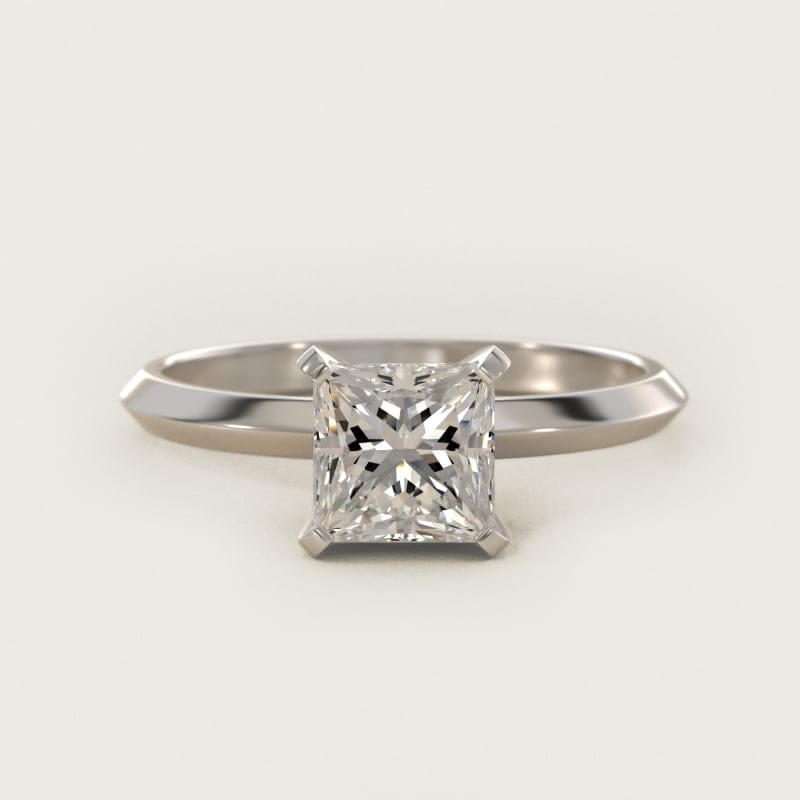
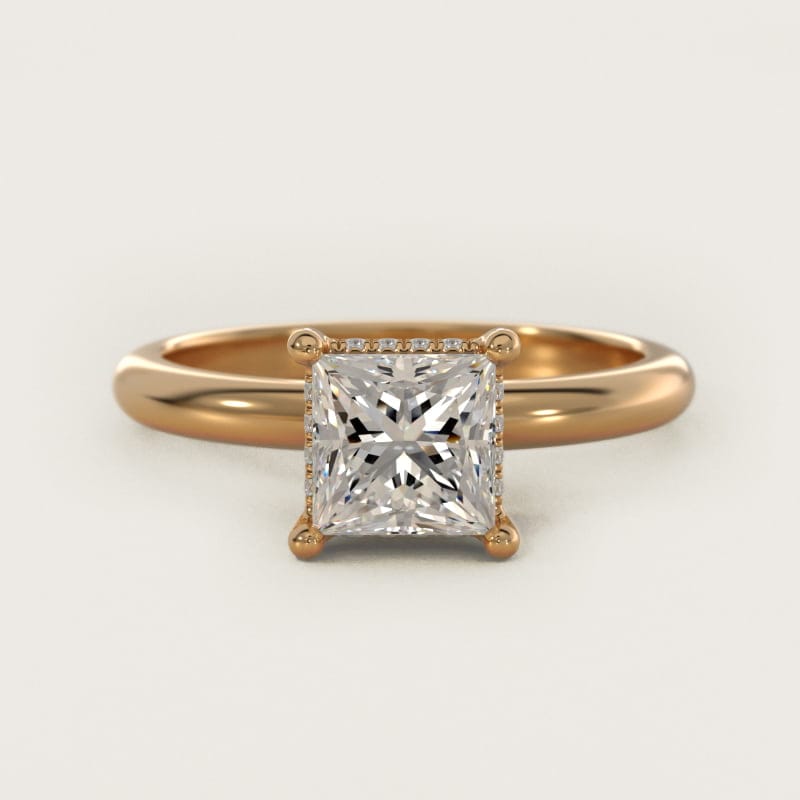
A princess cut has a square or slightly rectangular outline with four sharp, unclipped corners, and brilliant faceting rather than the long parallel steps of an emerald cut. Face-up, its facets form a distinctive X from corner to corner. A GIA report calls it a “square modified brilliant”, or a “rectangular modified brilliant” when it is longer than it is wide.
There is no single standard facet pattern. The pavilion carries rows of long chevron facets, usually two, three or four: fewer give bolder flashes, more a finer, busier sparkle. A radiant cut shares the brilliant faceting but trims the corners; the princess looks crisper and is more exposed at the tips.
What to look for in a princess cut
No cut grade, so read the proportions
GIA gives an overall cut grade only to round brilliants, so a princess report shows polish and symmetry but no cut grade (see reading a GIA diamond report). A well-cut princess is bright from corner to corner; a weak one shows a washed-out centre (a window, usually from a shallow pavilion) or dark corners (often from too much depth). As typical guidance, many well-performing princess cuts have:
- A total depth of about 64 to 75 per cent. Deeper stones hide weight and face up smaller.
- A table of about 65 to 75 per cent. Much larger tables can look flat.
- A girdle from thin to slightly thick. Avoid “extremely thin”, which invites chips at the corners.
- No culet, or a very small one.
Length-to-width ratio
Divide the length on the report by the width. From 1.00 to about 1.04 the stone reads square. From about 1.05 a slight rectangle shows, and beyond about 1.10 it is distinctly rectangular, a look some prefer because it lengthens the finger. Ratio is taste, not quality, but a stone sold as square should look square.
Colour and clarity in a princess
Brilliant faceting hides body colour well, though less completely than a round, and any warmth tends to gather in the corners. G or H usually faces up white in white gold or platinum; yellow or rose gold allows a grade or two lower.
The X pattern disguises small inclusions in the centre, so an eye-clean VS2 or SI1 is realistic. Near the corners, though, a feather is a durability risk as well as a visual one: check the clarity plot on the report and prefer stones whose inclusions sit away from the points. Our colour and clarity chart goes grade by grade.
How big a princess looks on the hand
A princess carries much of its weight in its deep pavilion, so edge to edge it measures less than a round of the same weight, but corner to corner it spans further. Approximate sizes for well-proportioned square stones:
| Carat weight | Edge to edge | Corner to corner |
|---|---|---|
| 0.50 ct | 4.4 mm | 6.2 mm |
| 0.70 ct | 5.0 mm | 7.0 mm |
| 1.00 ct | 5.5 mm | 7.8 mm |
| 1.50 ct | 6.3 mm | 8.9 mm |
| 2.00 ct | 7.0 mm | 9.9 mm |
A slim band or a halo makes any princess look larger. Our carat and size guide explains the general rules.
Protecting the corners, and settings that suit a princess
The pointed corners are the princess’s weak point. Diamond is the hardest natural material, but a sharp tip can still chip from a knock, so every corner should be covered. The standard answer is the V-shaped claw, or V-prong, a folded claw that cups each point; round claws at the corners leave the tips exposed. Check the claw style when you choose a setting: every design detail is confirmed with you before anything is crafted.
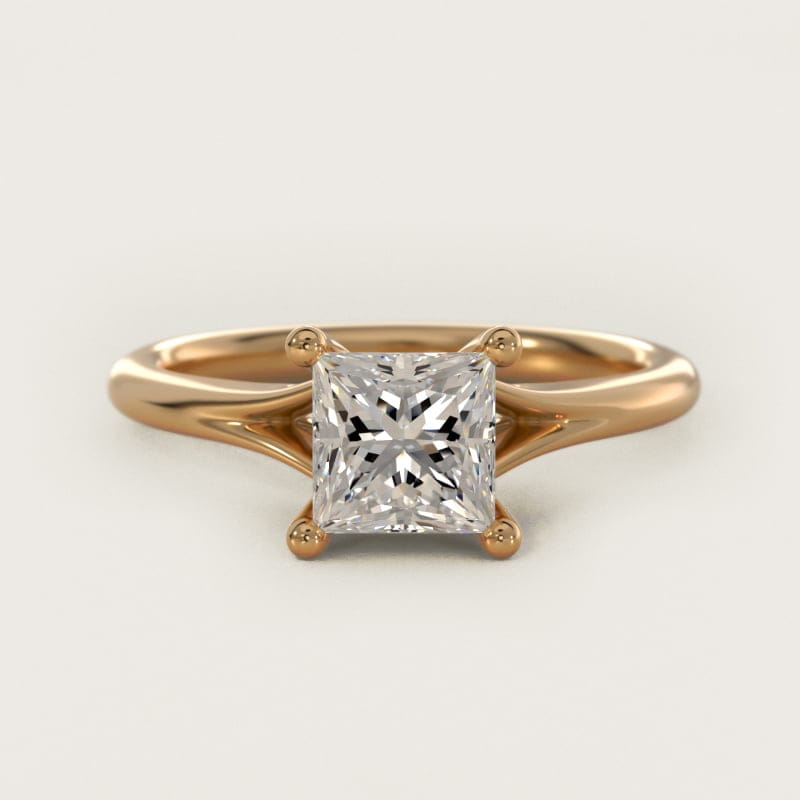
- Solitaire. Four V-claws on a plain band show the square most cleanly. See our solitaire engagement rings.
- Halo. A square halo shields the edges and adds size; a hidden halo keeps the silhouette sharp. See our halo engagement rings.
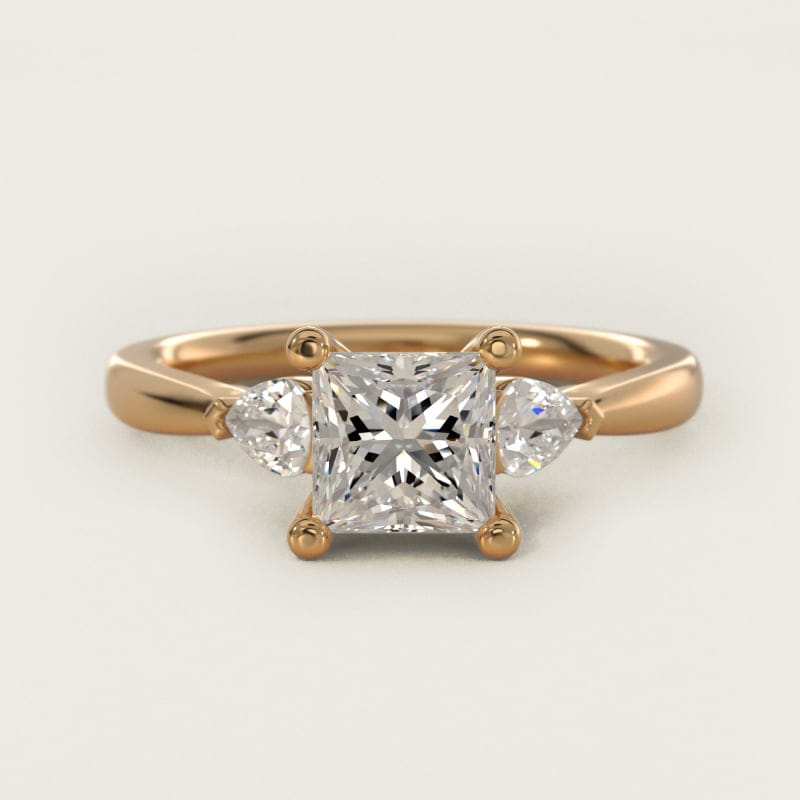
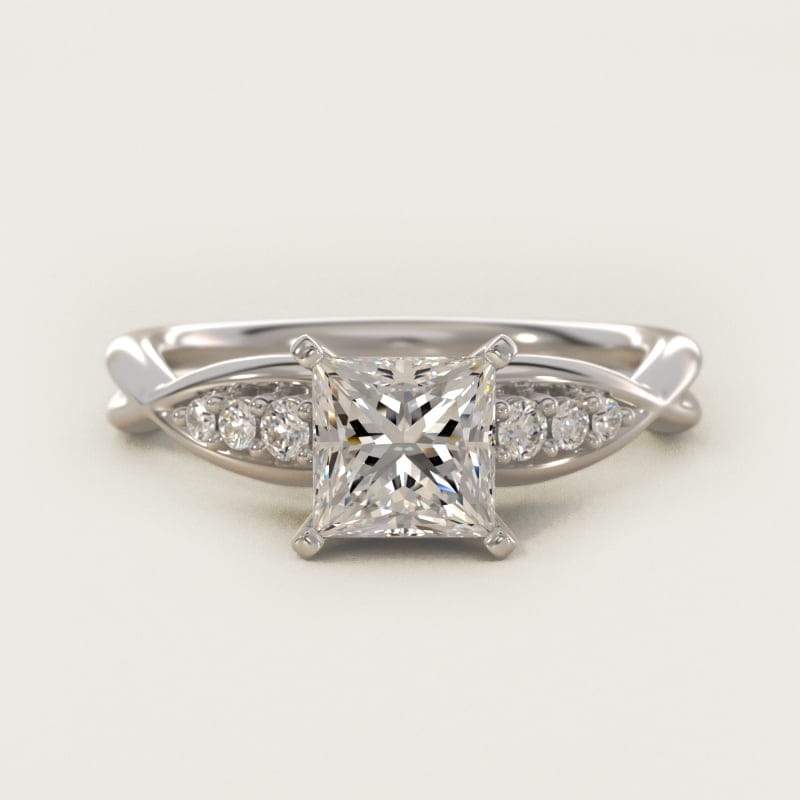
- Side-stone and three-stone. Baguettes or smaller stones suit its straight lines: see side-stone and three-stone engagement rings.
- Bezel. A rim of metal around the stone gives the most protection, for very active hands.
Every setting is made to order in Beirut in 18K white, yellow or rose gold or platinum. Below are princess settings from our collection; browse all our engagement rings in Lebanon, or pair a stone and a setting in build your ring.
See all 17 settings in this style
How to buy a princess cut diamond in Lebanon
Every princess cut we sell is a natural diamond with a GIA or HRD report, held in Beirut and priced against the Rapaport benchmark. We send its certificate and 360° video on WhatsApp, and you can check the report number on the laboratory’s website with our verification guide. If the princess you want is not in stock, we can source one to your specification, typically within 2 to 3 weeks.
Reserving requires a deposit, with the balance paid on collection. Collect by appointment in Beirut, or receive free insured delivery within Greater Beirut, typically in 24 to 48 hours (see delivery); buyers elsewhere in Lebanon or abroad collect by appointment in Beirut (see buying from abroad). A ring is made to order in about a week to ten days, or set into a ready-made mounting in 24 to 48 hours. Loose diamonds can be returned within 7 days if unset, unworn and undamaged, with certificate and packaging (see returns).
Common questions
Is a princess cut diamond durable enough for everyday wear?
Yes, provided the corners are protected. An exposed sharp tip can chip if it takes a hard knock, so set each corner in a V-shaped claw, or choose a bezel, and check that the report shows no extremely thin girdle and no feathers near the corners.
What is the best ratio for a princess cut?
For a square look, choose a length-to-width ratio between 1.00 and about 1.04. From about 1.05 a slight rectangle begins to show, which some buyers prefer because it lengthens the finger. Ratio is a matter of taste rather than quality.
What depth and table should a princess cut have?
As typical guidance, many well-performing princess cuts have a total depth of about 64 to 75 per cent and a table of about 65 to 75 per cent. GIA gives no cut grade to a princess, so use these figures as a first filter, then judge the stone on video.
Does a princess cut look smaller than a round?
Edge to edge, yes: a one-carat princess measures about 5.5 mm across its sides, against about 6.5 mm for a well-cut round. Corner to corner it spans about 7.8 mm, though, so on the finger it can look just as generous.
What is the difference between a princess and a radiant cut?
Both are brilliant-cut squares or rectangles, but the radiant has trimmed corners, which make it tougher in daily wear and give it an eight-sided outline. The princess keeps four sharp corners for a crisper look, and needs V-shaped claws to protect them.