
This diamond buying guide is the one we wish every first-time buyer read before the first email lands in their inbox. It walks the whole journey, budget, shape, the 4Cs, paper, the stone itself, the setting, and where to buy, in the order a calm buyer should take them, with nothing oversold.
Where a good diamond buying guide should start: the budget, as a framework
Begin with a number you are comfortable with and treat it as a frame, not a target to be filled to the brim. The job is not to spend the maximum; it is to spend it where it shows. A sensible budget decides one thing first; that you will buy the best-cut stone the frame allows and let the other Cs flex around it. Everything that follows in this guide is really a series of small trades inside that frame: a grade here for a millimetre there, a touch less clarity for a visibly better cut. We never put figures on this in print, because the right number is personal and the market moves; what does not move is the principle. Set the frame, then spend it intelligently; that single discipline is the spine of every diamond buying guide worth reading. Our guide to what to spend on an engagement ring works through that thinking without ever handing you a false rule of thumb.
How to choose a diamond shape
Shape comes early because it is the one decision driven by taste rather than grading, and it quietly shapes everything after it. A round brilliant returns more light than any other cut and forgives the most; it is the safe, brilliant default. The fancy shapes each have a character:

- Oval, pear, marquise: they wear larger than their weight and flatter the finger, at the cost of a possible bow-tie shadow to check for in motion.
- Cushion and radiant: brilliant-faceted, soft-cornered, forgiving on clarity.
- Emerald and asscher: step cuts, all calm and clarity, open windows that hide nothing, so buy them a grade or two stricter.
Shape also moves the price quietly: round costs the most per carat, several fancies trade at a discount for the same weight. Walk the full set, with the trade-offs spelled out, in our diamond shapes guide before you fix on one.
Understanding the 4Cs, and why cut comes first
The 4Cs, cut, colour, clarity and carat, are the grading language the whole trade speaks, and the heart of this diamond buying guide is knowing where to spend within them. The honest order of priority is not the order they are usually listed. Cut comes first. Cut is what makes a diamond return light; it is the only C you see from across a room, and it cannot be recovered later by any other grade. Buy cut at the top, Excellent, with polish and symmetry to match, and let the rest flex beneath it.
Then spend conservatively on the others. On colour, most buyers are happiest a step or two below the very top, where the warmth is invisible face-up but the saving is real. On clarity, the target is not a high grade but an eye-clean stone, one with no inclusion visible to the naked eye, which is reachable well down the scale. On carat, remember that weight and visible size are not the same thing; a well-cut, well-spread stone can look larger than a heavier, deeper one. The full reasoning, C by C, lives in our 4Cs of diamonds explained.
Why certification matters and which lab to trust
A certificate is the diamond’s passport, an independent laboratory’s grading of the exact stone, so that “G colour, VS2” means the same thing to you as it does to us. Buy a stone with a respected report, and never one without, because an ungraded diamond is a stranger’s word about something you cannot fully judge by eye. The labs that carry weight are consistent and independent of the seller; the two you will meet most often are covered in our GIA vs IGI certification guide, with their differences set out plainly. Paper, though, has one limit worth stating early: it certifies grades, not beauty. It tells you the frame, never the final answer.
Judging the actual stone, not just the paper
Here is the part the certificate cannot tell you, whether this particular stone is one you would be glad to own. Two diamonds can share a grade line and look nothing alike. So look past the report at the stone:
- Watch it in motion. A still photograph flatters every stone equally; rotation is where cut quality, dead zones and real character show. Insist on 360° footage of the actual diamond, as we argue in why you should see the 360° video first.
- Confirm eye-clean. Cross-check the clarity plot against what you can see face-up at arm’s length, the secret that lets informed buyers spend less without losing anything, set out in our eye-clean clarity guide.
- Look for haze. A faint milkiness, sometimes from strong fluorescence, is invisible in a bright still and unmistakable in a slow ten-second rotation. The grade narrows the odds; it never decides the answer.
This is the habit that separates a buyer from a label shopper, and it is the one lesson a diamond buying guide can give that pays for itself: the paper sets the frame, the stone has the final word. Spend ten unhurried minutes here and the rest of the purchase looks after itself.
Choosing a setting and a metal
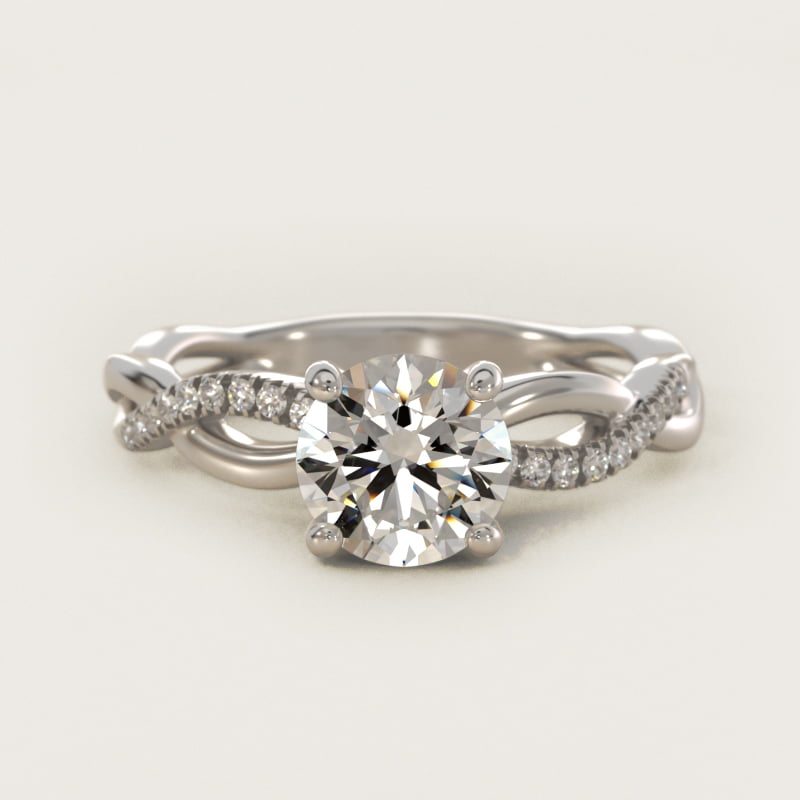
Only once the stone is settled does the setting come into focus, and it is more than decoration; it frames the diamond, protects it, and sets the whole register of the ring. A solitaire gives the stone the stage to itself; a halo lends apparent size; a hidden halo adds a secret sparkle from the side. The metal carries the mood: white metals keep a diamond looking icy and bright, yellow gold lends warmth and can let a slightly warmer stone sit beautifully, platinum offers the most durable hold for the long run. These are taste decisions with practical edges, and they interact with the stone you have already chosen, a warmer diamond, for instance, often looks its best in yellow gold. When you are ready to put stone and setting together, our build-your-ring tool lets you see the combinations side by side.
Where and how to buy a diamond safely
The last stage is the one that protects all the others. Buy from a seller who will show you the actual stone on video, hand over a respected certificate you can verify independently, and answer hard questions without flinching. Be wary of a price that seems too good; we have learned in the trade that the genuinely cheap diamond is almost always the expensive mistake, the stone that was never quite what the photographs promised. Buy from a reputable dealer who guarantees the stone is the one its certificate describes, and check the report number yourself on the laboratory’s own website, as our guide to verifying a GIA or HRD certificate online shows. A seller who shows you the actual stone, rotating, inclusions and all, has handed you evidence; a seller who shows you only flawless studio images has handed you marketing. For the full checklist of what a trustworthy purchase looks like, the questions to ask and the answers that should come back without hesitation, see our guide to buying a certified diamond in Beirut.
That is the whole journey: set the frame, choose a shape, buy cut first, insist on paper, then look past it at the stone, settle the setting, and buy where you can see and verify everything. When you are ready to put it into practice, browse our collection of certified loose diamonds, each one filmed, graded and ready to be judged on its own merits, exactly as this guide suggests.