

In the GIA vs IGI debate, the right answer depends less on which laboratory is “better” and more on what you are buying. Both are real, reputable grading labs, but they earned their reputations in different corners of the market, and knowing the difference is what keeps a diamond buyer from overpaying for paper.
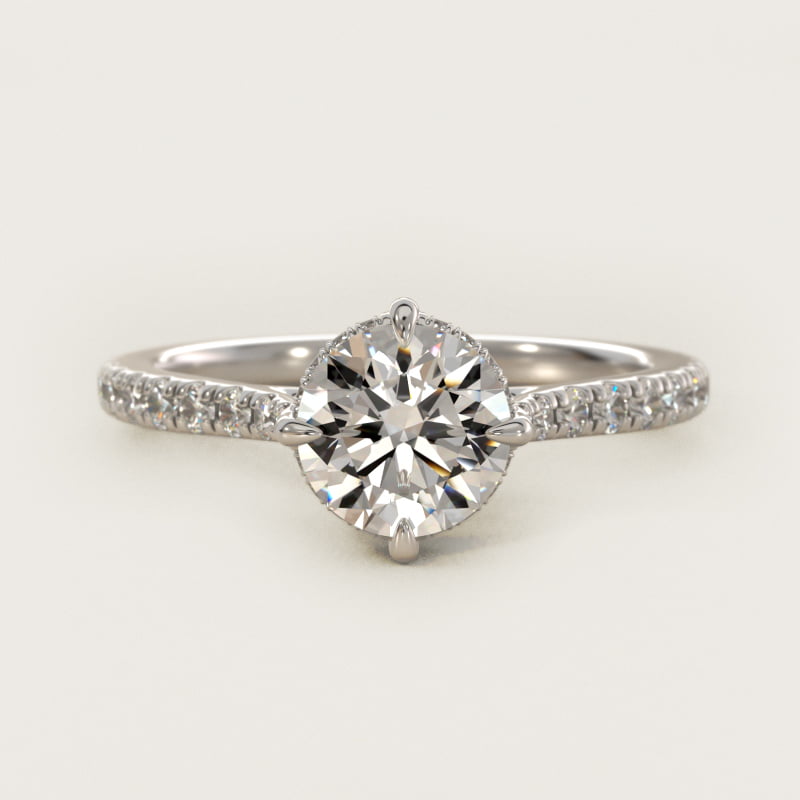
Quick answer: GIA and IGI are both diamond laboratories, but they are used differently. GIA is the global benchmark for natural diamonds and grades most consistently; IGI dominates lab-grown grading and is widely used there. For a natural diamond, prefer GIA or HRD, the real risk is buying any diamond with no certificate at all.
| GIA | IGI | |
|---|---|---|
| Best known for | Natural diamonds, global benchmark | Lab-grown diamonds |
| Consistency | Most consistent grading | Capable, but varies more |
| Use it for | Natural stones | Lab-grown stones |
What a diamond certificate actually is
Start with the thing most people misunderstand. A diamond certificate is not a guarantee of value or a promise that you paid a fair price. It is an independent laboratory’s expert opinion of a stone’s characteristics, carat weight, colour, clarity, cut, measurements, fluorescence, and whether the stone is natural or laboratory-grown. Nothing more.
That opinion matters enormously, because grading is a skilled human judgement made under controlled conditions. But it remains an opinion. Two competent labs can look at the same diamond and land a grade apart on colour or clarity: not because one is wrong, but because the lines between grades are fine. A certificate tells you what trained eyes saw. It does not tell you what you should pay. That part is on you, and on whoever you buy from. The full picture is laid out in our guide to diamond certification.
GIA vs IGI: how the two labs differ
GIA, the Gemological Institute of America, is the global benchmark. It is the laboratory that wrote the modern grading scale the whole trade now uses, and across decades it has built a reputation for being the strictest and most consistent reader of a stone. When the trade wants a grade that holds its value and travels anywhere without an asterisk, it sends the stone to GIA. For natural diamonds, GIA is the house standard.
IGI, the International Gemological Institute, is also reputable, and it is faster and built for high volume. That speed and scale are exactly why IGI has become the dominant laboratory for lab-grown diamonds, a category that is produced and certified in enormous quantity. If you are looking at a lab-grown stone today, the odds are very good its report carries the IGI name, and that is perfectly normal and trustworthy.
The honest caution in the GIA vs IGI comparison is not about fraud, both are legitimate. It is about consistency and grade-tightness. GIA’s grading is famously conservative and uniform from stone to stone. IGI is reputable, but across such high volume the tightness of its grading can vary, which means the same diamond may grade a touch differently from one laboratory to the other, often by a single colour or clarity step. That step can move the price meaningfully, so it pays to compare like with like:
- Same lab, same scale: compare a GIA-graded stone against other GIA stones, and an IGI stone against other IGI stones. Comparing across labs as if the grades were interchangeable is how buyers talk themselves into the wrong stone.
- Read the origin line: a modern report states clearly whether the diamond is natural or laboratory-grown. Confirm it says what you are paying for.
- Verify the report: type the laboratory’s address yourself and check the number, exactly as we describe in how to verify a certificate online.
What about HRD, the European lab?
There is a third name worth knowing. HRD is the long-established European laboratory, born in the heart of the European diamond trade, and one we also trust for natural stones. Its grading is well regarded and its reports are recognised across the trade. For the detail on how its style compares, we have written it up in GIA vs HRD certificates. For our purposes here, treat HRD as the European peer to GIA: serious, consistent, and a report you can rely on.
Why buying an uncertified diamond is the real risk
For all the careful comparison between GIA vs IGI, the genuine danger sits elsewhere. The real risk is buying a diamond with no certificate at all. An uncertified stone means accepting the seller’s word on colour, clarity, cut, and, most importantly, on whether the stone is natural or grown in a laboratory. To the unaided eye, and even to a loupe, a fine lab-grown diamond and a natural one can be indistinguishable. The only honest way to know which you hold is a report from an independent laboratory.
Without that paper, you have nothing to verify and no recourse. A grade you cannot check is not a grade; it is a sales pitch. This is precisely the gap that fraud exploits, and even a real certificate must belong to the stone you are actually buying, which only a reputable dealer can guarantee, because the modern scam is real paper paired with the wrong diamond, which we dissect in certificate swapping. The certificate is the floor of trust, not the ceiling. Buying below that floor is the one mistake that has no fix.
Where does this leave lab-grown versus natural?
It clarifies things rather than complicates them. The lab a stone was graded by often signals the kind of stone it is: a GIA or HRD report tends to accompany a natural diamond, an IGI report very often a lab-grown one. Neither category is “fake”, a lab-grown diamond is a real diamond, but they are different products at different prices, and the choice deserves its own clear-eyed look, which we give it in lab-grown versus natural: which to buy.
The house stance, stated plainly
In the Beirut trade, our position is simple. For natural diamonds, we deal in GIA and HRD. Those are the laboratories whose grading we have watched hold up, stone after stone, year after year, the ones whose paper means the same thing in Beirut as it does anywhere in the world. We are not dismissing IGI; for lab-grown diamonds it is the established and capable lab. We are simply telling you which standard we hold our natural stones to, because you deserve to know it before you buy, not after.
Every diamond in our loose diamond collection lists its laboratory and report number openly, so you can verify the grade before you ever message us. Decide what you want the certificate to mean, then let an independent laboratory, not a seller, be the one to say it.