
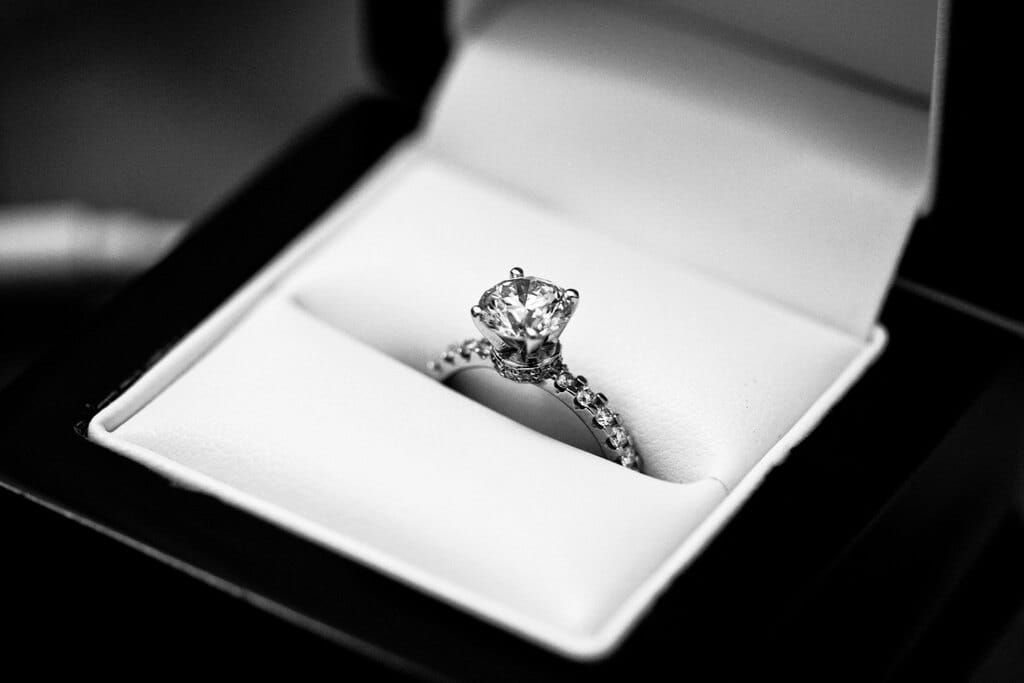
Where should you buy a diamond or an engagement ring in Lebanon? The honest answer is not an address but a standard: buy from a seller who passes a short, unsentimental checklist. This guide sets out what a good place to buy offers, the red flags, how to compare quotes against the trade benchmark and the questions to ask, so you can judge any seller, us included. Keep it open while you browse certified loose diamonds and engagement rings in Lebanon, or read how buying works with us.
What a good place to buy a diamond in Lebanon offers
Buying a certified diamond in Beirut should be the calmest purchase of your life, not the most nervous. A wise buyer needs no luck, only a checklist and the patience to use it. Whether the seller is a jeweller’s shop, a dealer or an online house, one worth your money offers all of the following, in writing and before you pay:
- Certified natural stones, with the report number checkable online. A GIA or HRD report for every diamond, and the number given to you before you pay, so you can look it up on the laboratory’s own website.
- A listed price for each stone. A price per stone that you can see and compare, not a figure that appears only after a conversation about your budget.
- A 360° video of the actual diamond. Not a stock clip or a photograph of a similar stone: the stone you will receive, turning in the light.
- A written returns policy. Clear terms on what can be returned, within how long and in what condition, before any money changes hands.
- A clear timeline for a made-to-order ring. How long the ring takes, when the design becomes final, and what can still change after that.
- Insured delivery or collection by appointment. A safe, documented handover, with an invoice that names the stone and its report number.
- The origin in writing. A line on the invoice stating that the diamond is natural, with its grades and report number.
Insist on GIA or HRD, and nothing softer
A certified diamond means a stone graded by an independent laboratory the whole trade trusts. In practice that means two names: the GIA (Gemological Institute of America) and the HRD in Europe. Both are consistent, conservative and accountable. Reports from lesser labs are often a grade or two more generous, which is precisely why a seller reaches for them. If someone offers a diamond with an unfamiliar certificate, the question is not whether the paper is real; it is why this stone could not earn a GIA or HRD report. We explain the difference in our note on HRD vs GIA certificates; either is sound. Anything else, treat with caution.
Verify the report number yourself, on the laboratory’s own site
This is the single habit that protects you most, and it costs nothing. Every GIA and HRD report carries a number. Look it up directly on the laboratory’s own website: not a link the seller hands you, but the official site you reach yourself. The grading details there must match the paper in your hand, line for line, and a genuine seller will encourage you to do it before you pay. We walk through the steps in how to verify a GIA or HRD certificate online. If a seller is reluctant to let you check, you have already learned what you needed to know.
Demand price transparency against the benchmark
Certified diamonds do not have mysterious prices. The trade prices against a published benchmark, the Rapaport list, and a stone’s four characteristics place it within a narrow, knowable band. A serious seller can show you how your diamond sits against that benchmark and explain, plainly, why it costs what it costs. We set out how that works in our explanation of the Rapaport price list. You are not asking for a discount; you are asking the seller to think out loud. One who will not is not pricing a diamond, he is naming a number.
How to compare two quotes side by side
Two quotes can only be compared when they describe the same thing. Before you look at the bottom line, line them up:
- Same laboratory. A GIA or HRD grade and a grade from a softer laboratory are not the same grade, even when the letters match.
- Same grades. Carat weight, colour and clarity, and for a round stone the cut, polish and symmetry. Fluorescence can move the price too.
- Same benchmark. Ask each seller for the Rapaport list price for that exact grade and where their price sits against it. Compare those positions, not only the totals.
- Same scope. A loose stone, a stone set in a finished ring and a price “with the setting” are three different quotes. Ask for the stone and the setting separately.
Our how we price page shows the method we apply to every stone, and diamond prices in Lebanon today lists real prices from our stock that you can hold any other quote against.
See the stone move
A diamond is bought for the way it returns light, which cannot be judged from a photograph or a clarity grade. See it move. In person, turn it slowly under three lights, daylight, a warm bulb, a cool one, and watch how it behaves. Buying from abroad or online, insist on a true 360° video of the actual stone, not a stock clip; we explain why in why you should see the 360° video first. A stone with a clean report can still look lifeless. Only motion tells you.
Shop, souk, online or private sale: the honest trade-offs
In Lebanon you can buy a diamond from a jeweller’s shop, in the gold souks, from an online seller or privately. None is good or bad in itself; each needs the same checklist, applied a little differently.
- A jeweller’s shop. You see the ring in person and can come back with questions. Ask for the report number of the centre stone, and whether the price covers the stone, the setting or both.
- The gold souks. Good for gold and for comparing many windows in one afternoon. For a diamond, insist on the same things as anywhere else: a GIA or HRD report, a number you can check and a written invoice.
- An online seller. Listed prices and videos make comparison easy. Insist on a 360° video of the stone itself, a business you can reach by phone and meet by appointment, and written returns terms.
- A private or second-hand sale. The price can be tempting, but no reputation stands behind the sale. Have the stone checked by an independent, well-known gemmologist before any money changes hands.
Whether it is cheaper to buy in Lebanon or abroad depends less on the country than on how many retail layers sit between the trade and you; our case for buying your diamond in Lebanon explains why.
Red flags when buying a diamond in Lebanon
- No report, a report from a laboratory you have never heard of, or a “certificate” issued by the shop itself.
- Reluctance to give you the report number before you pay, or a “verification” link sent by the seller instead of the laboratory’s own site.
- Photos of a similar stone, or a video that does not show the stone you will receive.
- A vague claim of “wholesale” prices with no benchmark you can check.
- A dramatic discount off a high starting price that nobody can explain.
- Pressure to decide today, or a price that holds only “if you pay now”.
- No written invoice stating that the stone is natural, with its grades and report number.
- Returns terms and ring timelines that exist only as verbal promises.
One red flag is a reason to ask more questions; two are a reason to walk away. Our guide to choosing a diamond seller you can trust and our note on certificate swapping go further.
Questions to ask any seller
- Which laboratory graded this diamond, and what is the report number?
- Is it natural, and will you write that on the invoice?
- What is the Rapaport list price for this exact grade, and where does your price sit against it?
- Can I see a 360° video of this exact stone?
- Is the price for the loose stone, the setting or the finished ring?
- How long will the ring take, and when does the design become final?
- What is your returns policy, in writing, for the loose stone and for the ring?
- Is delivery insured, and where and how do I collect?
- Has the stone had any treatment?
A good seller answers all nine without hesitation, and is glad you asked.
Above all, buy from a name the market knows
The last item is the most important, and it quietly does the work of all the others. You should not have to play detective, measuring a stone, weighing it, peering at it through a loupe to satisfy yourself that the diamond in front of you is the one the paper describes. The surest protection a retail buyer has is to buy from an established, reputable jeweller or diamond dealer: a real, verifiable business with a name known in the market and a reputation for honesty, reachable by phone, that meets you by appointment and puts everything in writing, and therefore has everything to lose from a single bad stone. A house like that guarantees that the stone is the one its certificate describes; that standing reputation, not a microscope, is the real assurance the paper and the diamond belong together. It is also the house that is still there afterwards, with a straight answer two years later. A seller whose name rests on being right cannot afford to be wrong with you.
The exception is a private or second-hand purchase, where no such reputation stands behind the sale. There, take the place of the trusted name yourself: have the stone checked by an independent, well-known gemmologist before any money changes hands.
How diamonds.com.lb answers the same checklist
For transparency, here is how we measure up. diamonds.com.lb is an online diamond house in Beirut that sells natural diamonds only, each graded by GIA or HRD with a report number you can check online, physically in stock in Beirut and listed with its price and a 360° video. You reserve with a deposit and pay the balance on collection. Rings are made to order in about a week to ten days, or your diamond is set into a ready-made mounting in 24 to 48 hours. A loose diamond can be returned within 7 days if it is unset, unworn and undamaged, with its certificate and packaging; a made-to-order ring cannot be refunded once crafted. Delivery is free and insured within Greater Beirut; everyone else pays and collects by appointment in Beirut. How it works sets out every step.
Bring the checklist, take your time, and the right stone will hold up to every question. When you are ready, our certified loose diamonds are here to be examined.
Common questions about where to buy a diamond in Lebanon
Where is the best place to buy an engagement ring in Lebanon?
The best place is any seller, shop or online, that passes the checklist: a GIA or HRD report you can check online, a price for each stone, a 360° video of the actual diamond, written returns terms, a clear ring timeline and an invoice stating that the stone is natural. An established reputation matters more than the type of shop.
Is it safe to buy a diamond online in Lebanon?
It can be, if the seller is a real business you can reach by phone and meet by appointment, sends a 360° video of the exact stone, gives you the report number to check on the laboratory’s own website before you pay, and puts the returns terms and the stone’s natural origin in writing.
How do I compare two diamond quotes?
First make sure both describe the same laboratory, the same grades and the same scope, loose stone or finished ring. Then ask each seller for the Rapaport list price for that grade and where their price sits against it, and compare those positions rather than the totals alone.
Is it cheaper to buy a diamond in Lebanon than abroad?
Not automatically. Diamonds are priced against the same global benchmark everywhere, so the difference comes from the retail layers added on top. Buying a certified stone close to the trade, at a price you can compare with the benchmark, matters more than the country you buy it in.
What should a diamond invoice include?
The carat weight, shape, colour and clarity grades, the laboratory and report number, a statement that the stone is natural, the price, and for a ring the metal and the setting. Keep it with the original report: together they document the stone if you ever need to insure it.