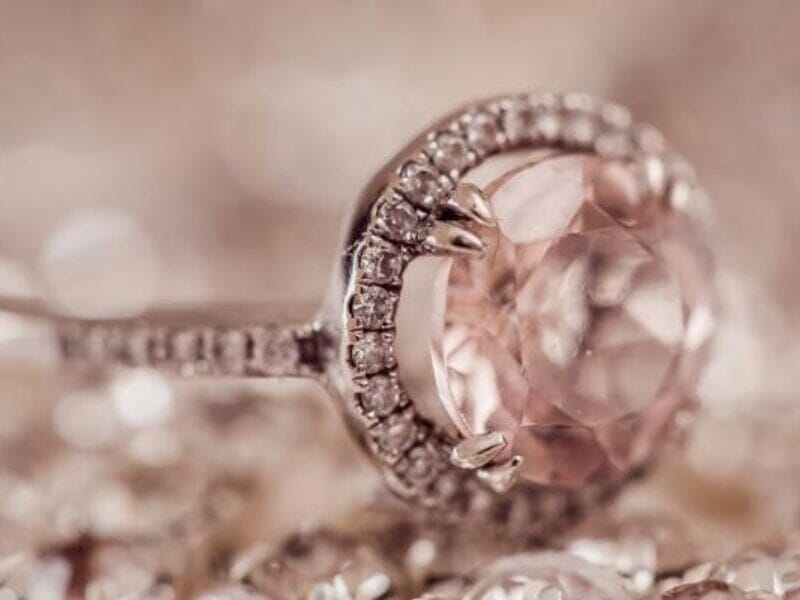
A diamond is the hardest natural material there is, and it still arrives at our counter chipped, loosened or dulled, almost always from ordinary life, not bad luck. From long experience in the trade we can tell you that caring for a ring is mostly a few small habits, and protecting it is good paperwork.
The habits that prevent most damage
The most useful rule is the oldest one in the trade: the ring is the last thing on and the first thing off. Put it on after your hand cream and perfume; take it off before anything that asks your hands to work. Diamond resists scratching, but the setting does not, and a sharp knock can chip even a stone hit at the wrong angle.
So take it off, properly off, not pushed up the finger, before the things that actually do the harm:
- Anything with impact or grip: the gym, sport, heavy housework, gardening.
- The sea and the pool. Cold water shrinks the finger and rings slip; salt and chlorine harm the metal.
- Harsh cleaning chemicals, and any task where you would hate to lose it.
And give it one place to live when it is off, a small dish by the basin at home, a zipped pouch when you travel. Most lost rings are not stolen; they are set down somewhere new and forgotten.
A five-minute clean at home
A diamond looks lifeless long before it is damaged, and the reason is almost always a film of soap, skin oil and hand cream on the underside of the stone, where light should enter. You can clear it in five minutes: warm water, a drop of mild dish soap, and a soft brush, an old toothbrush is ideal, worked gently behind and around the stone, then patted dry with a lint-free cloth. Do it every week or two and the ring stays bright.
One caution: keep the ultrasonic cleaners for the bench, not the bathroom. They are excellent in trained hands, but they can shake loose a stone whose setting has already begun to tire. At home, warm water and a brush are enough.
Document the ring, insured or not
A ring is far easier to value, replace or claim on when you can prove exactly what it was. So document it properly the day it is yours:
- The certificate, the GIA or HRD report recording the stone’s weight, colour, clarity and measurements. This is the spine of the file, and it already ties the stone to its paper.
- Clear photographs from several angles, so the piece is seen, not merely named.
- The measurements in millimetres, so the ring is described in numbers anyone can check against the report.
Keep that file somewhere you can reach, and a copy somewhere else. When everything matches, a replacement is a description and a measurement, not an argument. If you are still buying, our guide to buying a certified diamond in Beirut covers how to be sure the paperwork is real first.
Whether to insure it at all
Here we will be plain: in Lebanon, most people do not insure their jewellery, and we are not going to tell you otherwise. A ring worn carefully, documented properly and looked over from time to time is already well protected against the things that actually happen to it.
Insurance earns its keep mainly for clients who live abroad, or who carry the ring into the diaspora, where scheduling a valuable on a household policy is ordinary practice. If that is you, insure the ring specifically, named on the policy and valued against its certificate, not folded into a vague household line, so a claim rests on a matching report, photographs and measurements rather than a hope.
Wherever the ring ends up, get the fit right, since one that turns or slips is sooner knocked or lost, our ring-size guide will help. Keep the habits and keep the paperwork honest, and the ring will outlast all of us.