The question of lab-grown vs natural diamonds rarely needs more hype; it needs an honest framework. Both are real diamonds. The right answer is not the same for everyone; it depends on what you personally value. Here is how to decide, from a house that grades and trades both.
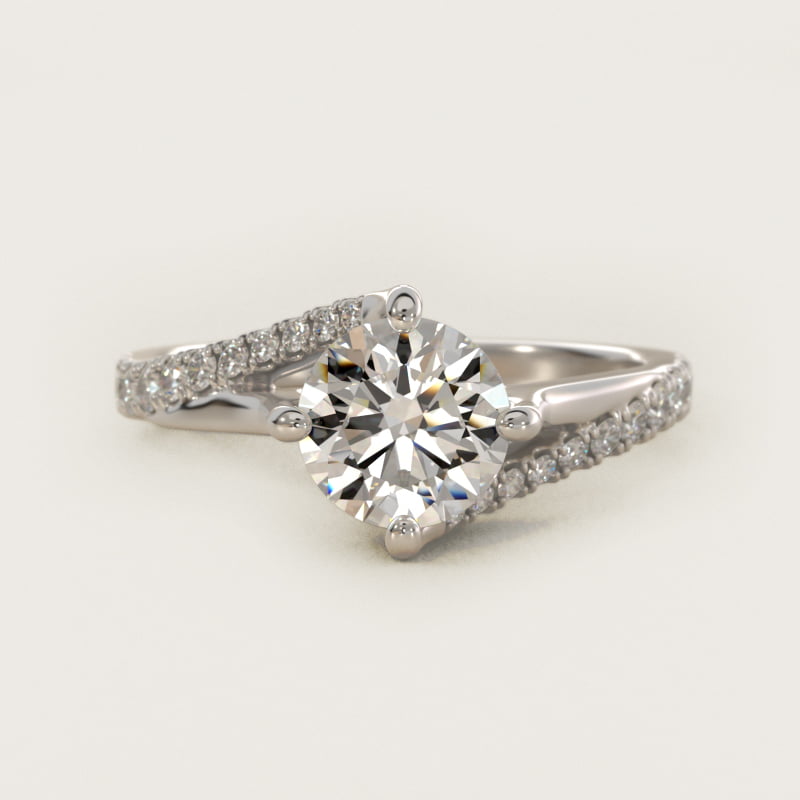
Quick answer: Lab-grown and natural diamonds are optically and chemically identical and sparkle the same way. The difference is origin and economics: natural diamonds are mined, rare and hold their value, while lab-grown are made in weeks, cost far less and keep falling in price. Choose natural for lasting value, lab-grown to maximise size on a budget.
| Natural | Lab-grown | |
|---|---|---|
| Origin | Mined over billions of years | Grown in a lab in weeks |
| Appearance | Identical sparkle | Identical sparkle |
| Price | Higher | Much lower |
| Value over time | Holds value | Tends to fall |
| Best for | Lasting value and meaning | Maximum size on a budget |
Are lab-grown and natural diamonds the same thing?
Chemically and physically, yes. A lab-grown diamond is carbon arranged in the same crystal structure as one pulled from the earth; the difference is only where it formed and over what span of time. Set the two side by side and no jeweller can tell them apart by eye, nor by loupe. The separation is made by specialised laboratory equipment, not by a counter and a good light.
This matters because the most common worry, “will people be able to tell?”, has a plain answer. They will not. So the decision is not about beauty or about being found out. It is about a smaller set of differences that are real, but quieter than the marketing on either side suggests. The genuine choice between lab-grown vs natural diamonds turns on a handful of things, and we will take them in turn.
Lab-grown vs natural diamonds: do they look and last the same?
On appearance, the honest verdict is that they are optically identical when cut to the same standard. A well-cut lab-grown stone and a well-cut natural stone of the same colour and clarity return light the same way. A poorly cut one of either origin looks dull. Cut, as always, does more for beauty than origin ever will, the heart of our guide to the 4Cs.
On durability, the two are equal. Both sit at 10 on the Mohs scale, the same as any diamond. There is no truth to the idea that a grown stone is softer or more fragile; hardness is a property of the crystal, and the crystal is the same. Either will outlast the setting it is held in.
How are they graded and certified?
Here the paths diverge a little. Natural diamonds are most often graded by GIA or HRD, the laboratories the trade has long trusted. Lab-grown diamonds are dominated by IGI, which built much of its reputation grading them; GIA grades them too, on a separate report. The grading vocabulary, colour, clarity, cut, reads the same, but the report will state plainly that the stone is laboratory-grown.
If you are weighing one lab against another, it is worth understanding how they differ before you read too much into a grade. We set that out in our note on GIA versus IGI certification. Whatever the origin, the rule does not change: buy a stone with a credible report, and look at the stone itself rather than only its paper.
What about price and resale value over time?
When people compare lab-grown vs natural diamonds on price, this is where the real difference lives, and where buyers most need candour. Lab-grown diamonds cost meaningfully less to produce than natural ones, and as production has scaled, their prices have fallen, and they continue to fall. A grown stone bought today is likely to be available for less tomorrow. That is excellent news if your goal is the most size and sparkle for your budget right now.
It is less comforting if you think of a diamond as something that holds its worth. Natural diamonds have a long, if imperfect, record of value retention; lab-grown stones, as a young and still-cheapening category, do not. Neither should be bought as an investment; that is a separate trade with its own rules. But if resale and value retention weigh on you at all, the natural stone currently carries the steadier story. You can browse what we hold in our loose diamond collection with this distinction in mind.
What about rarity, heirlooms and meaning?
A natural diamond formed over a span of time the human mind cannot really hold, and was found rather than made. For some buyers that is the whole point, the rarity, the sense of a single object that will pass down a family and gather meaning as it goes. A lab-grown stone, however beautiful, is reproducible; another just like it can be made next week.
This is not a fact to argue someone out of, in either direction. If the romance of origin and the idea of an heirloom move you, that is a real value and it points one way. If what moves you is the stone on the hand today, and you find the geology beside the point, that is equally valid and points the other. No certificate adjudicates this; only you can.
Which is the more responsible choice?
Neither origin is simple, and anyone who tells you one is cleanly “ethical” is selling something. Lab-grown stones avoid mining, but growing them is energy-intensive, and that energy is only as clean as the grid behind it. Natural diamonds carry the history of mining, but a well-run, traceable supply chain also funds livelihoods and is far better governed than it once was.
The useful move is to ask for traceability rather than to assume virtue from a label. We set out how we think about this in our approach to responsible sourcing. Honest sourcing is a question you put to the seller, stone by stone: not a box that origin alone ticks.
So which should you buy?
The framework reduces to your own priorities:
- Choose lab-grown if you value the most size and quality for your budget today, are untroubled by resale, and find the question of origin beside the point.
- Choose natural if you value rarity, the steadier story on value retention, and the idea of an heirloom that carries the weight of having been found rather than made.
In the end, the lab-grown vs natural diamonds question has no wrong answer, only a wrong reason, buying against your own priorities because someone told you to. For our fuller view of this debate from inside the Beirut trade, see our honest view from the Beirut trade, and when you are ready to weigh real stones of either kind, our diamond buying guide will walk you the rest of the way. Tell us what you value, and we will show you the stones that fit it.