
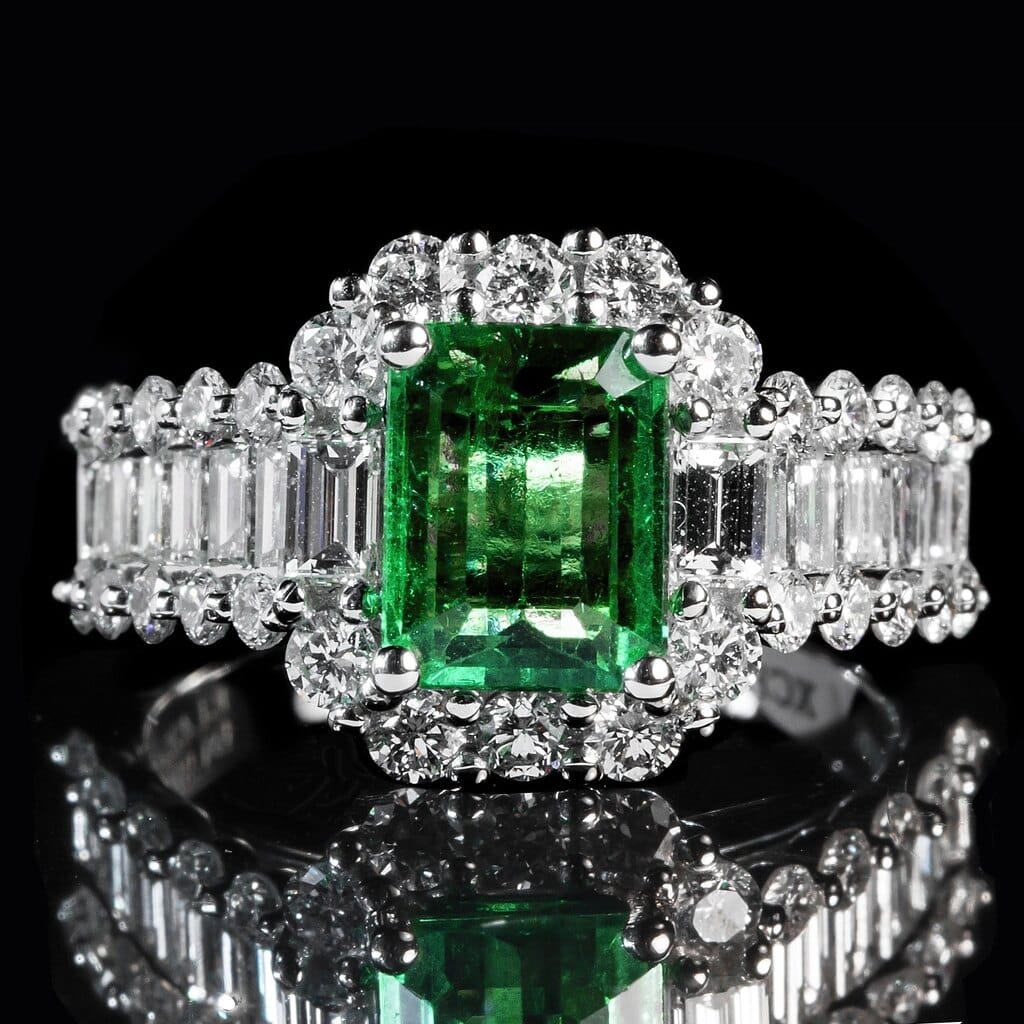
A lab-grown diamond is a real diamond: same carbon, same hardness, same fire. So if you are thinking of a lab-grown diamond in Lebanon, the useful question is not which one sparkles more, but how the two differ on the report, in price over time, at resale and in meaning. This is an honest look from a Beirut house that sells natural diamonds only: browse our certified natural diamonds, our GIA-certified stones or our engagement rings in Lebanon once you have decided.
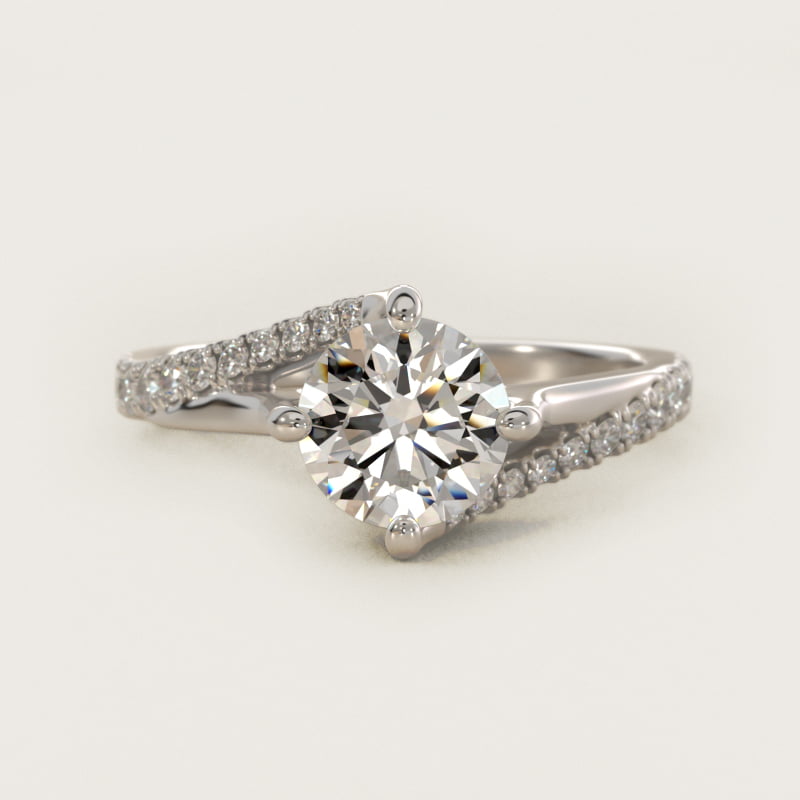
Lab-grown vs natural at a glance
| Natural diamond | Lab-grown diamond | |
|---|---|---|
| Origin | Formed deep in the earth over billions of years, then mined | Grown in a reactor in a matter of weeks |
| Material and hardness | Crystallised carbon, 10 on the Mohs scale | The same |
| Appearance | Identical when cut to the same standard | Identical when cut to the same standard |
| Usual grading reports | GIA, HRD | IGI most often; GIA issues a separate report |
| What the report says | No laboratory-grown wording | States “laboratory-grown”; the girdle is usually inscribed to match |
| Prices over time | Traded against a benchmark the whole trade can see; no guarantee of future value | Have fallen as production has grown |
| Resale | An established trade market, at a trade price below retail | Little to no established resale market |
| At diamonds.com.lb | Every stone we sell | Not sold |
Are lab-grown diamonds real diamonds?
Yes. Chemically and physically, a lab-grown diamond is carbon arranged in the same crystal structure as a stone taken from the earth. The only difference is where it formed and over what span of time: a natural diamond took the earth an almost unimaginable length of time to make, while a grown one is produced in weeks. No honest person will tell you that one “sparkles more” than the other. They do not.
That sets lab-grown diamonds apart from simulants such as cubic zirconia and moissanite, which look like diamond but are different materials with different properties. If that is the comparison you are weighing, read moissanite vs diamond.
Do they look and wear the same?
On appearance, the honest verdict is that they are optically identical when cut to the same standard. A well-cut lab-grown stone and a well-cut natural stone of the same colour and clarity return light the same way, and a poorly cut stone of either origin looks dull. Cut does more for beauty than origin ever will, which is the heart of our guide to the 4Cs.
On durability, the two are equal. Both sit at 10 on the Mohs scale, like any diamond. There is no truth in the idea that a grown stone is softer or more fragile: hardness is a property of the crystal, and the crystal is the same. Either will outlast the setting that holds it.
How are they graded and certified?
Here the paths diverge. Natural diamonds are most often graded by GIA or HRD, the laboratories the trade has long relied on; every stone we sell carries one of those two reports, and our note on GIA vs HRD certificates explains how they compare. Lab-grown diamonds are mostly graded by IGI, which built much of its reputation on them, and GIA grades them too, on a separate report.
The single most important line on any report is the one that states the stone’s origin, natural or laboratory-grown. A credible report says it plainly, and that line matters more than any colour or clarity grade. If you are weighing one laboratory against another, our comparison of GIA and IGI certification sets out the differences.
How a lab report labels a lab-grown diamond
A credible laboratory never leaves origin to guesswork. When GIA grades a lab-grown diamond, it issues a separate laboratory-grown report that states the origin plainly, and it laser-inscribes the stone’s girdle with words saying it is laboratory-grown, alongside the report number. The other major laboratories that grade lab-grown stones follow the same principle: the report names the stone as laboratory-grown, and many also state the growth method (CVD or HPHT) and whether the stone was treated after growth.
In advertising you will also meet softer words: “lab-created”, “man-made”, “cultured” or simply “created”. Whatever the word, it means the same thing: the diamond was grown, not mined. A natural diamond’s report carries no such wording.
What this means for you in practice:
- Read the origin first. Before colour, clarity or carat, find the title or line that states whether the stone is natural or laboratory-grown.
- Check the report online. Enter the report number on the laboratory’s own website and confirm that the origin and the grades match the paper and the listing.
- Leave the inscription to professionals. A girdle inscription is microscopic and takes magnification and practice to read. Your protection is the online report check and a reputable dealer who puts the origin in writing, not your own work with a loupe.
Value over time: what an honest seller can say
Lab-grown diamonds are manufactured, and manufacturing scales. As production has grown, the cost of growing a stone has fallen, and lab-grown prices have fallen with it. A grown stone bought today is likely to be available for less tomorrow. That is good news if what you want is the most size and sparkle for your budget right now, and poor news if you imagine the stone holding its worth.
A natural diamond is finite: no factory can make more of them. Certified natural stones trade among professionals against a benchmark the whole industry can see, the Rapaport list, and there is a functioning trade market for them. That does not make a diamond an investment. Natural prices move too, nobody can honestly promise what any stone will be worth later, and neither kind should be bought for profit. But if value over time weighs on you at all, the natural stone carries the steadier story.
Resale: what happens if you ever sell
Most people never sell an engagement ring, but it is worth knowing what would happen if you did, because the two kinds of diamond behave very differently.
Lab-grown. There is little to no established resale market for lab-grown diamonds. Because new stones keep getting cheaper to produce, a dealer has little reason to buy a used one, and many may not make an offer at all. Buy a lab-grown stone for the pleasure of wearing it, and assume it has no resale value you can count on.
Natural. Certified natural diamonds do have a trade market, and a GIA or HRD report makes a stone far easier to sell, because any buyer can check it in a minute. Be clear about what that means, though: a dealer buys at a trade price, which is below what you paid at retail, and the gap can be large. Prices also move with the market. A certified natural diamond is easier to sell; it is not a promise of getting your money back.
So treat resale as a tie-breaker, not a reason to buy. Nobody can honestly tell you what any diamond will fetch in the future, and we do not pretend to. For the wider question, read do diamonds hold their value?
Why the difference weighs more in Lebanon
Anyone who went through Lebanon’s banking crisis knows what happens to savings when a currency falters and accounts are frozen. Through it all, a certified natural diamond in a drawer remained exactly itself: portable, private and recognised by the trade wherever you go. Many Lebanese families have long treated jewellery as quiet, portable value for exactly that reason.
A lab-grown stone cannot yet play that role. Its beauty is real; its resale value is not established. A natural stone would still sell below what was paid for it at retail, but the trade will still recognise it and put a price on it years from now. For a couple here choosing one important stone, that distinction is not abstract.
When lab-grown genuinely makes sense
We will not pretend it never does. If you want a larger look for a fixed budget, lab-grown gives you more stone for your money, honestly. For a pair of earrings, a fashion piece you will never sell, or a second ring to travel with, it can be a sensible and beautiful choice.
What we ask is only this: buy it knowing what it is, and pay a lab-grown price for a lab-grown stone. We do not sell lab-grown diamonds ourselves, so this is advice, not a sales pitch.
Is one origin more responsible?
Neither origin is simple, and anyone who tells you one is cleanly “ethical” is selling something. Lab-grown stones avoid mining, but growing them takes a great deal of energy, and that energy is only as clean as the grid behind it. Natural diamonds carry the history of mining, but a well-run, traceable supply chain also supports jobs and communities and is far better governed than it once was.
The useful move is to ask for traceability rather than assume virtue from a label. Every natural diamond we sell comes through the Kimberley Process with conflict-free warranties, as set out on our responsible sourcing page.
How to tell them apart: the report and the dealer
Not by eye, and not with a loupe. Set a natural and a lab-grown diamond side by side and no jeweller can separate them by looking. A basic diamond tester will not help either: it confirms that a stone is diamond, not which kind. Telling origin apart takes specialised laboratory equipment, which is exactly why the grading report matters so much.
In practice, two things protect you:
- Buy from a reputable dealer who will put the origin of the stone in writing and stand behind it. Our guide to choosing a diamond seller you can trust sets out what to look for.
- Insist on a report from a recognised laboratory and check it online. Enter the report number on the laboratory’s own website and confirm that it states the origin you are paying for, and that the carat weight, measurements and grades match the listing. Our guide to verifying a GIA or HRD certificate online shows where to look.
The one mistake to refuse is paying a natural price for a laboratory stone. It happens, sometimes through ignorance and sometimes by design, with a genuine certificate that belongs to a different stone. We have written plainly about that trick in certificate swapping: real paper, wrong stone, and our checklist for where to buy a diamond in Lebanon lists what to ask before any money changes hands.
Why we sell natural diamonds only
This is a business choice, made calmly, and not a judgement on anyone who prefers a lab-grown stone. We are a natural diamond house: every stone we hold is natural, graded by GIA or HRD, physically in stock in Beirut and priced against the Rapaport benchmark for natural diamonds, as our how we price page sets out.
Keeping to one kind of diamond keeps our stock, our pricing method and our advice simple. It also means you never have to wonder which kind you are looking at: if a stone is on our site, it is natural, and its report says so. If natural is what you are after, our page on natural diamonds in Lebanon shows the stones in stock and how a natural report reads.
And if you decide that lab-grown suits you better, we would rather you buy one knowing exactly what it is than buy anything from us for the wrong reason.
So which should you buy?
The decision comes down to your own priorities:
- Choose lab-grown if you value the most size for your budget today, are untroubled by resale, and find the question of origin beside the point.
- Choose natural if you value rarity, the steadier story on value over time, and the idea of an heirloom that was found rather than made.
There is no wrong answer here, only a wrong reason: buying against your own priorities because someone told you to. If natural is your choice, every stone in our loose diamond collection is natural, GIA- or HRD-certified and held in Beirut with its 360° video, and you can pair one with a setting in the ring builder. For the wider picture, our diamond buying guide takes you the rest of the way.
Common questions about lab-grown diamonds in Lebanon
Is a lab-grown diamond a real diamond?
Yes. A lab-grown diamond has the same chemical composition, crystal structure and hardness as a natural diamond, and it sparkles the same way. The difference is origin: it is grown in weeks in a reactor rather than formed in the earth, and a credible grading report states that origin plainly.
Can you tell a lab-grown diamond from a natural one by eye?
No. Neither the naked eye nor a jeweller’s loupe can separate them, and a basic diamond tester only confirms that a stone is diamond. Origin is identified with specialised laboratory equipment, so the practical protection is a report from a recognised laboratory, checked online, and a reputable dealer.
Does diamonds.com.lb sell lab-grown diamonds?
No. diamonds.com.lb sells natural diamonds only, each graded by GIA or HRD, with a report number you can check on the laboratory’s own website. Lab-grown diamonds are discussed on this page for education only, and none are offered for sale.
Do lab-grown diamonds hold their value?
Generally not. Lab-grown prices have fallen as production has grown, and there is little to no established resale market for them. Certified natural diamonds trade on an established market, but below retail and at prices that move, and no honest seller can promise what any diamond will be worth later. Neither should be bought as an investment.
Can I resell a lab-grown diamond in Lebanon?
Possibly, but do not count on it. There is little to no established resale market for lab-grown diamonds, because new stones keep getting cheaper to make, and many dealers may not buy them at all. Certified natural diamonds are easier to sell, though below the retail price you paid. Nobody can promise what any diamond will fetch later.
How does a report show that a diamond is lab-grown?
A credible report states the origin plainly. GIA issues a separate laboratory-grown report and inscribes the girdle with words saying the stone is laboratory-grown, alongside the report number, and other major laboratories follow the same principle. Check the report number on the laboratory’s own website and buy from a dealer who puts the origin in writing.
Which laboratories grade lab-grown diamonds?
IGI grades most lab-grown diamonds, and GIA grades them too on a separate report. Natural diamonds are most often graded by GIA or HRD. Whatever the laboratory, the report should state the stone’s origin clearly, and its number should be verifiable on the laboratory’s own website.
How can I be sure the diamond I buy in Lebanon is natural?
Buy from a reputable dealer who puts the origin in writing, and insist on a GIA or HRD report. Check the report number on the laboratory’s own website and confirm that it states a natural origin and that the weight, measurements and grades match the stone you are being sold.